

Ablative lasers are used for deeper wrinkles, acne scars, skin texture problems, and severe sun damage when superficial skincare treatments are not effective enough. Removal of layers of skin in a controlled manner, followed by skin renewal, results in more visible changes to the skin than with more superficial lighter-based treatments.
This guide explains the benefits and risks of ablative laser resurfacing while showing how treatment type, device control, and professional experience influence the overall decision.
What Is Ablative Laser Treatment and Why Is It More Intensive?
How Ablative Laser Resurfacing Works
Ablative lasers remove a controlled area of the skin’s surface by delivering energy through the skin, sometimes penetrating part of the dermis in the process. As a result of creating a wound on the skin’s surface, the skin’s natural processes of healing a wound will kick in and recreate the surface of the skin, plus stimulate new collagen in the dermis as it remodels.
This treatment is more intense than others on the market, as it creates specific, controlled thermal and structural changes in the skin. In contrast to an average facial or a non-ablative skin treatment, which heat up deeper skin layers but do not remove the surface layer, ablative skin resurfacing induces visible healing of the skin.
The treatment may be used for concerns such as:
1. Moderate or deeper facial wrinkles
2. Atrophic acne scars
3. Uneven skin texture
4. Sun-related skin damage
5. Certain pigmentation irregularities
6. Scars and stretch marks in appropriately selected cases
A professional consultation is required as not all of these issues require the same degree of treatment, coverage, or number of sessions.
Fractional Ablative vs. Fully Ablative Treatment
In a fully ablative treatment, the surface of all treated areas is removed. Such treatments deliver the most intensive resurfacing but typically require the longest amount of time to heal and will require more post-treatment wound care.
Fractional ablative treatment of the skin is divided into very small, individual beam zones of treatment, each column of skin being treated whilst the surrounding skin remains ‘untreated’ as the area supports the skin’s post-treatment healing process. This enables clinicians to control the level of tissue coverage to achieve their specific treatment objectives.
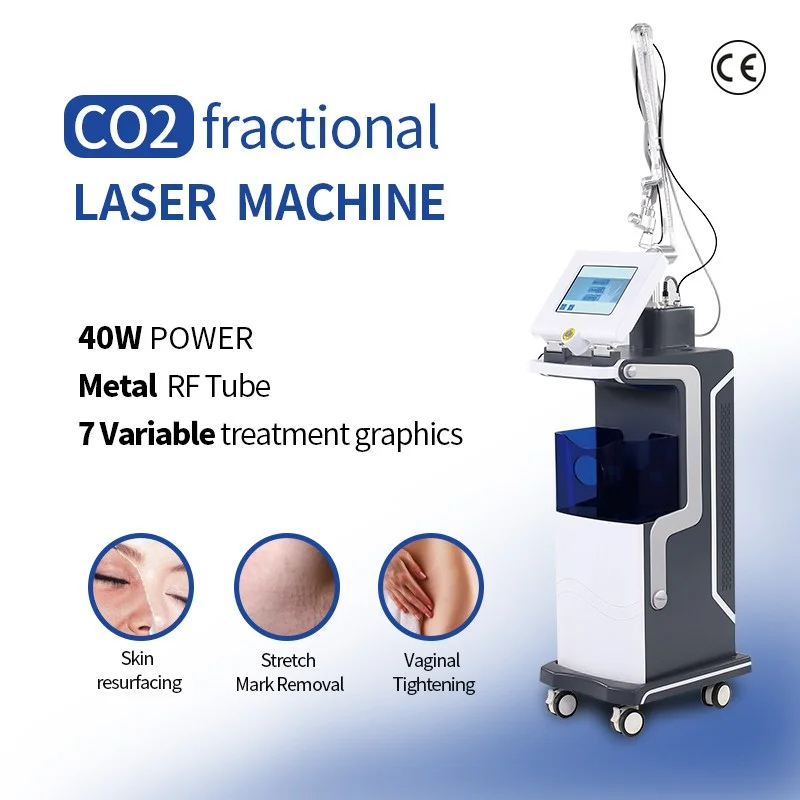
KES laser MED-870+ is operated with a 0.12 mm spot size. The scan area is up to 20 × 20 mm. Seven different scan shapes are available, i.e., square, rectangle, circle, triangle, rhombus, ellipse, and line. These scan shapes can be matched to the corresponding areas of the human body.
What Are the Main Benefits of Ablative Laser Treatment?
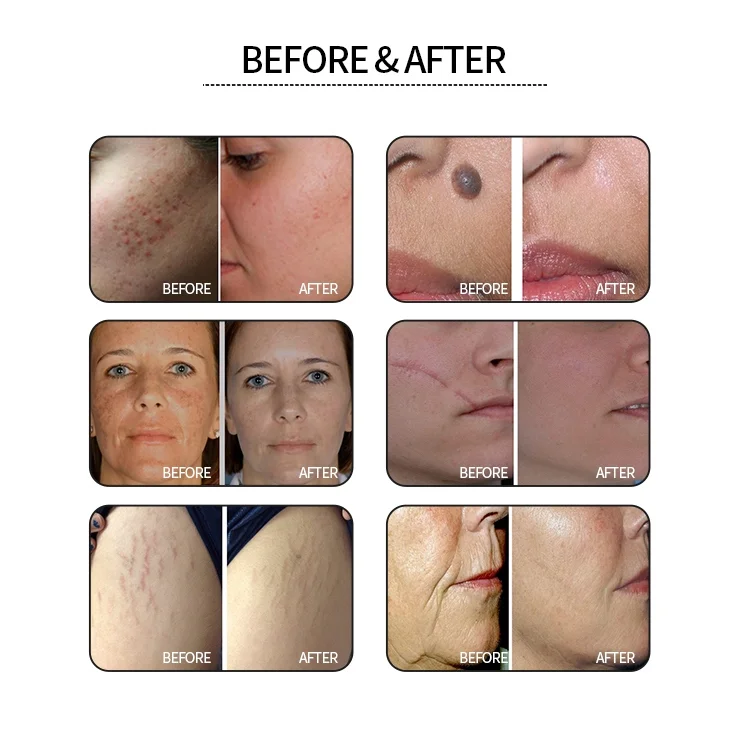
One of the reasons patients choose ablative skin resurfacing is that it treats multiple issues of the skin and can be addressed all in one treatment. So, rather than picking one spot on the face to treat, ablative resurfacing can treat several issues of the skin all at once in one treatment.
Potential benefits include an even-textured skin, a smooth, fine-line, wrinkle-free skin with reduced appearance of acne scars, and more even-toned skin. Improvement of fine lines and acne scars is a surface improvement that will begin to improve as the skin enters the healing process. Improvements in fine lines, wrinkles, skin tone, and collagen production will occur as collagen begins to remodel gradually over time.
The following table summarizes common concerns and their relevant treatment considerations.
|
Skin concern |
Potential benefit |
Main tradeoff |
|
Deeper wrinkles |
More noticeable resurfacing and collagen remodeling |
Longer redness and recovery |
|
Atrophic acne scars |
Improvement in uneven texture and scar edges |
Several sessions may be needed |
|
Sun-damaged skin |
Reduction in roughness and irregular tone |
Careful sun avoidance is required |
|
Mild fine lines |
Smoother surface appearance |
A less aggressive option may be sufficient |
|
Uneven texture |
Controlled removal of damaged surface tissue |
Results depend on treatment depth and healing |
What Are the Risks and Side Effects of Ablative Laser Treatment?
Typically, there will be some signs of facial rejuvenation that others can see for a short period of time following a facial treatment. Although some level of peeling and possibly some crusting will occur following a facial treatment, it is under the patient’s control and can be more or less than in other patients depending on a variety of factors, including depth of penetration, density of treatment, size of treatment area, and individual sensitivity. Some signs of facial rejuvenation may include redness, swelling, heat, sensitivity, and discomfort that will peak in the first 24 hours and then begin to subside as the facial skin begins to heal.
Potential complications include prolonged redness, bacterial or viral infection, delayed healing, post-inflammatory hyperpigmentation, hypopigmentation, and scarring. These complications are less common than temporary redness or peeling, but they must be discussed before treatment.
Several factors can increase the level of risk:
- Selecting excessive treatment intensity
- Treating active infection or inflamed skin
- Inadequate pre-treatment assessment
- Poor wound care after the procedure
- Early sun exposure during recovery
- A history of abnormal scarring
- Inappropriate treatment planning for the patient’s skin tone
- Insufficient operator training
Skin tone requires particular attention. Patients with darker skin types may have a higher tendency to develop post-inflammatory pigmentation changes after aggressive resurfacing. This does not automatically exclude them from treatment, but conservative planning, test areas, careful parameter selection, and strict sun protection may be necessary.
The quality of the equipment also supports the consistent clinical use. The KES laser ablative laser machines have been tested for clinical and quality approval by TUV Medical CE. We systematically apply quality-control measures for the inspection of materials, production, measurement of energy output, stability tests, packaging, and checks on delivery.
While these controls promote consistency of treatment, no machine can remove the 100% risk of treatment. Other factors such as patient screening, practitioner’s experience, hygiene, parameter selection and aftercare treatment must also be considered.
Who Is a Suitable Candidate for Ablative Laser Resurfacing?
A suitable candidate usually has a concern that is significant enough to justify an intensive procedure. The patient should also understand that improvement does not mean perfect skin and that visible recovery may be necessary.
Moderate wrinkle lines, established acne scars, rough skin texture, and signs of severe photo-aging of the skin are ideal candidates for this laser. Patients must be in good health, have realistic expectations, and follow all post-operative instructions.
Postponing or avoiding treatment is indicated in patients with active or open skin infections, non-healing inflammatory skin conditions, unrealistic expectations, a history of keloid formation, recent tanning, on medications that could affect treatment, or prior cosmetic treatments.
Rather than the most aggressive treatment being the clinical goal and the least aggressive being considered acceptable, the clinical goal is the least intensive treatment that brings about a relevant change for the individual concerned.
Is Ablative Laser Treatment Worth It?
Ablative resurfacing is best used to obtain significant improvement in texture and may warrant the downtime and potential complications of the procedure. Such a situation would be for individuals with deeper skin texture issues that have not improved with previous superficial peeling agents.
Three questions can guide the decision:
- How noticeable is the current skin concern?
- How much recovery time is the patient willing to accept?
- Does the expected benefit outweigh the individual’s risk profile?
There is no laser that delivers the best results with the deepest or strongest of treatments. The best ablative laser treatment is one that gives the best balance between results, recovery, and safety.
The choice of equipment by clinics and distributors is also crucial to enable flexible treatment according to treatment plans.
KES laser, a renowned developer of light-based medical and aesthetic equipment since 1999, provides complete OEM and ODM support from industrial design to functional design, as well as software and interface design and logo customization. A wide array of R&D, QC, production, training, and after-sales teams is also available.
Distributors and clinics that require more than one device can benefit from a range of services such as training materials, user manuals, videos, information in different languages, and remote support.
Frequently Asked Questions About Ablative Laser Treatment
Q: What are the main benefits and risks of ablative laser treatment?
A: Potential benefits of chemical skin peels are smooth skin, soft wrinkles, less visible acne scars, and skin that has gone through a process of collagen remodeling. As with any skin treatment, there are also potential risks, and these are redness, swelling, peeling, changes in skin pigmentation, skin infection, delay of peeling or of healing, and, in extreme cases, scarring. The depth to which a peel penetrates the skin, your skin type, previous medical history, the experience of the person carrying out the treatment, and your aftercare all play a large part in determining the level of risk.
Q: Is ablative laser treatment worth it for wrinkles or acne scars?
A: Moderate to severe wrinkles and established acne scars – provided the patient is willing to take the time for recovery. For mild wrinkles and fine lines, a less invasive alternative would be more suitable for results vs. downtime.
Q: Who is a good candidate for ablative laser resurfacing?
A good candidate for this type of treatment has a skin concern that can benefit from deeper resurfacing, has realistic expectations for results, has stable skin health and adequate healing, and is willing to follow all pre-treatment and post-treatment instructions.
Q: Can ablative laser treatment cause hyperpigmentation in darker skin tones?
A: Yes. Post-inflammatory hyperpigmentation can occur after ablative resurfacing, particularly in darker skin tones or after excessive treatment intensity. Careful assessment, conservative parameters, sun protection, and professional follow-up can help manage the risk.
Q: What is the difference between fractional and fully ablative laser treatment?
A: Fractional treatments create many very small treatment columns, which allows for very fast healing of the surrounding skin. Fully ablative treatments remove the entire surface of the treated area and provide the most aggressive form of resurfacing. They require the longest amount of time to heal and have the most amount of aftercare.