

Tattoo removal machine technology has advanced quickly, giving aesthetic clinics greater flexibility and accuracy than before. Small clinics face an important decision when choosing between a portable tattoo removal machine and a vertical tattoo removal machine. The correct pick can boost workflow, treatment reliability, and financial results. Both systems rely on modern Q-switched or picosecond laser technology to shatter tattoo pigments securely, yet the structure and strength differ a lot.
What Are the Key Differences Between Portable and Vertical Tattoo Removal Machines?
Clinic owners must first understand how portable and vertical tattoo removal machines vary in design and performance reliability before looking at cost or efficiency. Both employ basic Nd:YAG laser methods, but the setups influence durability, cooling ability, and ongoing operation capacity.
Design and Structure Comparison
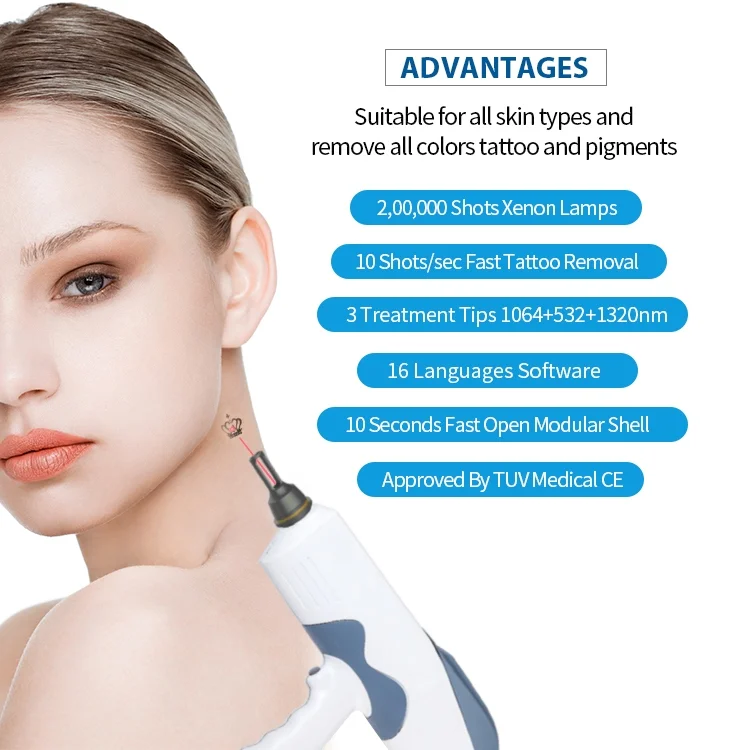
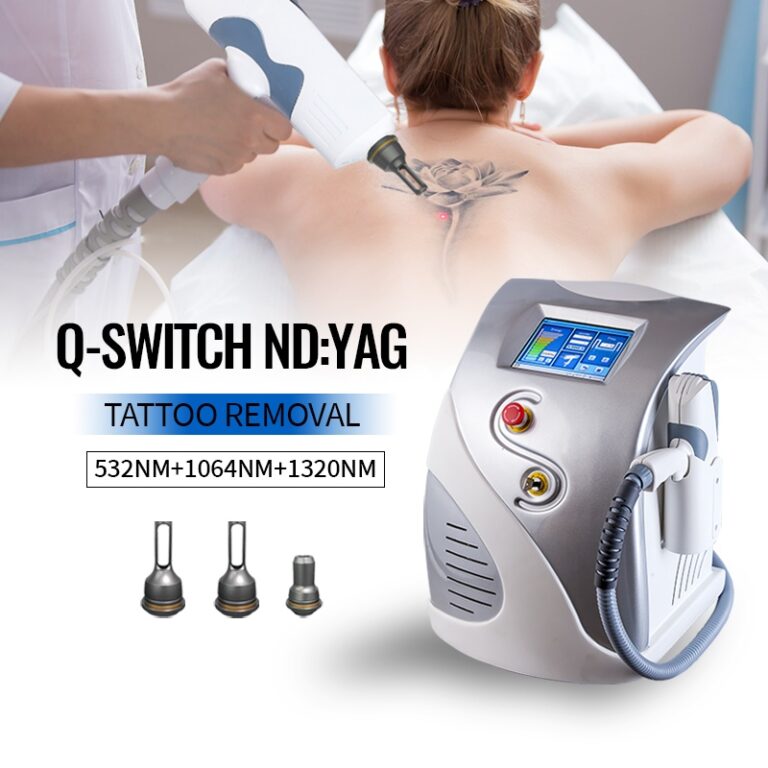
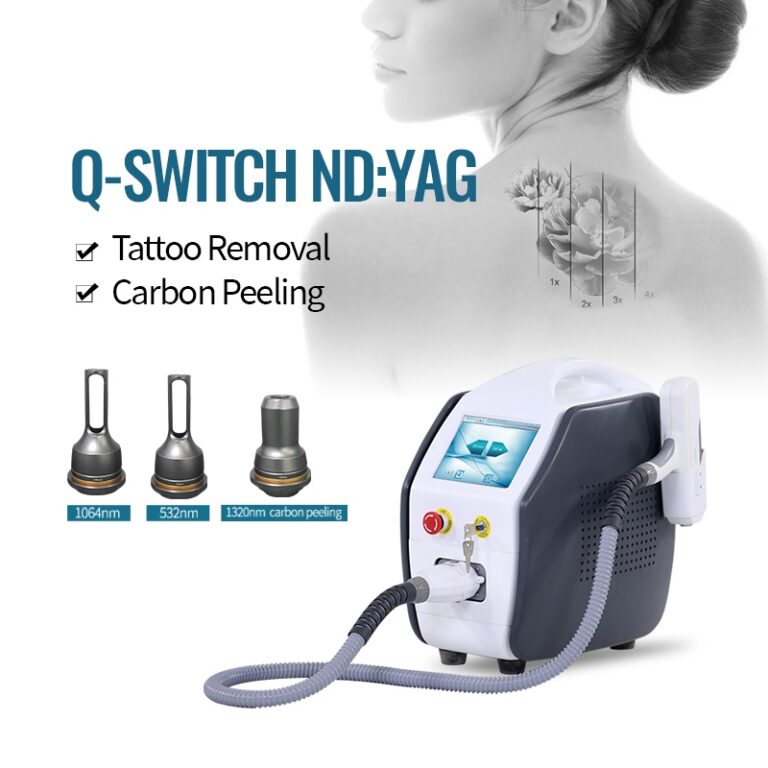
Portable tattoo removal machines feature small units built for simple movement between rooms or for on-the-go services. For instance, the Q Switch ND YAG Laser Machine-Elite Pro MED-810A counts as portable with strong output, measuring 45×40×57cm and weighing 25kg net. Such a setup fits small clinics that require adaptability or tight-space arrangements.
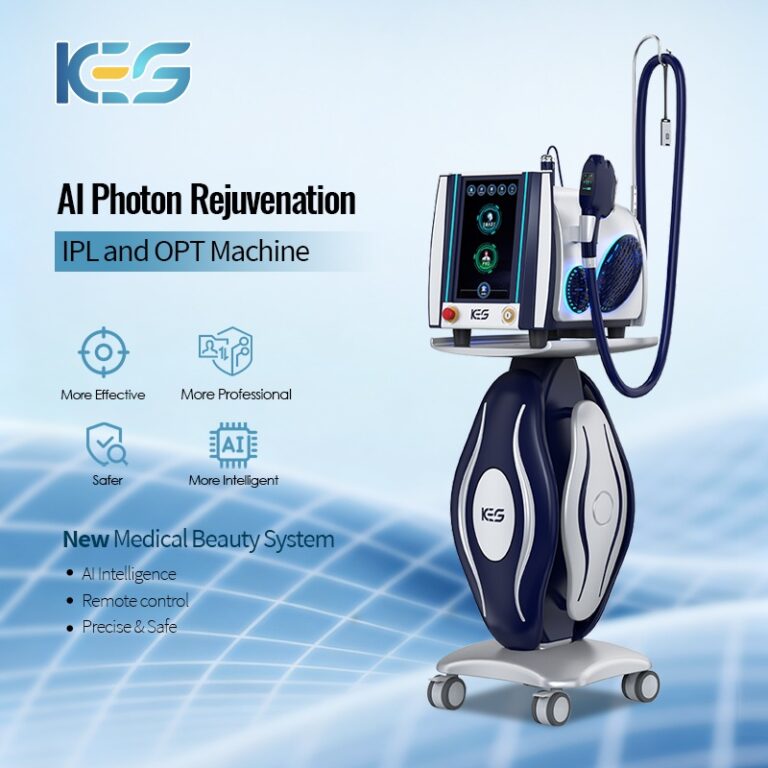
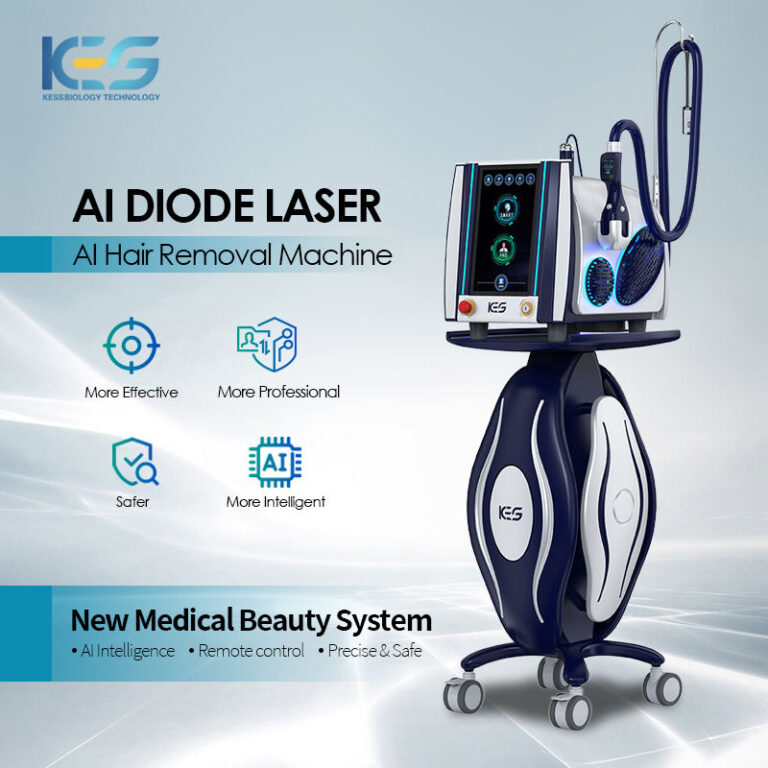
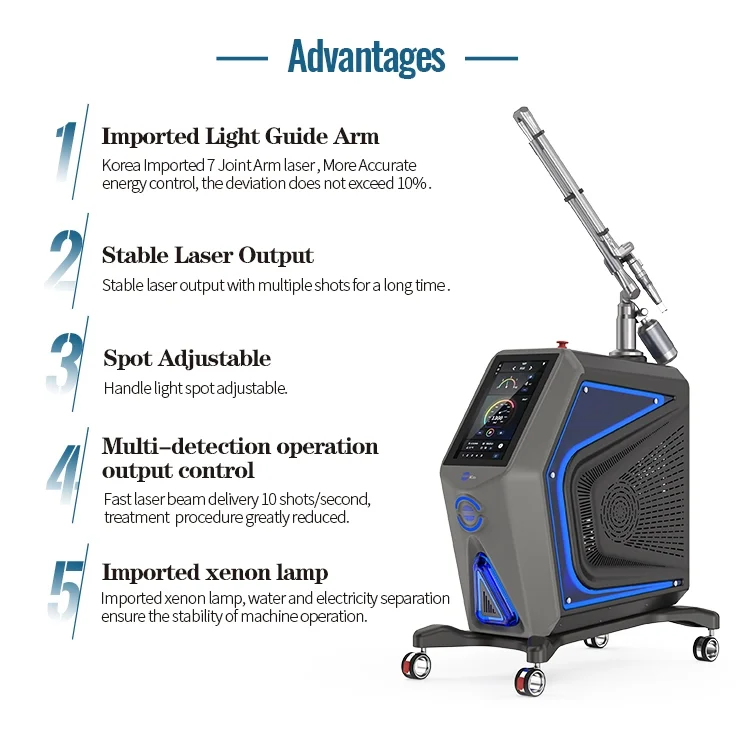
Vertical tattoo removal machines use a tall cabinet design with bigger inner parts. The ND YAG Pico Laser System-MED-860 RENO includes a 15.6-inch display, a water cooling system, and power up to 1500VA. This upright layout supports better cooling effectiveness and improved heat release during extended treatment periods. The design variation impacts service needs directly—portable models might need more regular checks because of compact cooling setups.
| Size & Weight | Compact (25–30 kg) | Larger (50–70 kg) |
| Cooling System | Air + Water | Advanced Water Cooling |
| Mobility | High | Limited |
| Maintenance | More frequent | Less frequent |
Power Output and Performance Stability
Power output decides how well pigments break apart in skin layers. The Elite Pro MED-810A supplies dual laser rods with high energy of 1600mJ, adequate for typical tattoos. Vertical systems like the MED-860 RENO offer peak single pulse energy of 2000mJ (1064nm) via “Top-Hat” Beam Technology, which provides an even energy spread to reduce skin surface harm.
This variation shows that vertical systems usually give steadier outcomes over drawn-out sessions without getting too hot—essential for clinics treating several clients each day.
How Do Portability and Space Efficiency Affect Clinic Operations?
In small clinics, where space matters greatly, equipment placement can determine operational smoothness. Portability shapes space use and shows how staff can adjust treatment rooms for various procedures.
Advantages of Portable Tattoo Removal Machines for Small Clinics
Portable models work well for new businesses or cost-aware owners. The reduced size permits adaptable room setups or even treatments away from the main site. The cheaper starting cost attracts fresh business owners in the beauty sector, too.
Limitations of Portable Systems in Daily Operation
Even with ease, portable machines face challenges in busy settings. Smaller water tanks or radiator setups limit steady use during rush times. Weaker laser strength might demand extra visits per client for complete pigment removal.
Often, moving units between rooms can speed up damage to parts like xenon lamps or fiber links. KES laser reports xenon lamp life over 1,000,000 shots, but rough handling may cut that period short.
Why Might Some Clinics Prefer Vertical Tattoo Removal Machines?
Clinics with reliable client numbers often choose vertical setups because these support heavy workloads while keeping output quality steady.
Benefits of Vertical Laser Systems in Clinical Settings
Vertical tattoo removal machines contain larger cooling parts that hold laser temperature even during prolonged runs. The MED-860 RENO employs imported xenon lamps with water-electricity separation for reliability in long sessions. This arrangement lowers breaks between treatments—a major plus when handling back-to-back clients.
Potential Drawbacks of Vertical Models for Smaller Clinics
Still, these gains involve expenses—both in money and room. Vertical systems take up more floor area (often over one square meter) and need fixed spots close to water sources if water-cooled. The steeper buy price can strain startup budgets at first, although lasting dependability balances this through fewer repair stops.
Service demands can increase, too, from combined circuit boards and double-cooling paths that call for expert repair staff.
What Factors Should Small Clinics Consider When Choosing Between the Two?
Picking the proper tattoo removal machine means weighing technical features against business plans, not just initial prices.
Key Decision Criteria for Equipment Selection
1. Treatment Demand Forecasting
Make a practical guess at monthly patient numbers. If the clinic manages under 50 sessions monthly, a portable system like the MED-810A series works fine; larger numbers support buying strong vertical units such as the MED-860 RENO.
2. Budget Allocation Strategy
Review full ownership costs—including supplies, service deals, and parts access—to predict ROI over three years.
3. Space Management Planning
Check room sizes precisely before buying to prevent crowding treatment spots or blocking paths between beds and gear stations.
4. Staff Training Requirements
Choose models that match the team’s expertise; simple touchscreen controls ease daily tasks while lowering mistake chances in fast treatments (up to 10 shots per second).
Summary: Finding the Right Balance Between Portability and Performance
Portable and vertical tattoo removal machines each bring distinct advantages for various clinic needs. Portable units focus on low cost, easy movement, and simple handling—perfect for beginners or traveling beauty experts—while vertical systems supply better steadiness and added functions for set clinics dealing with tough color issues.
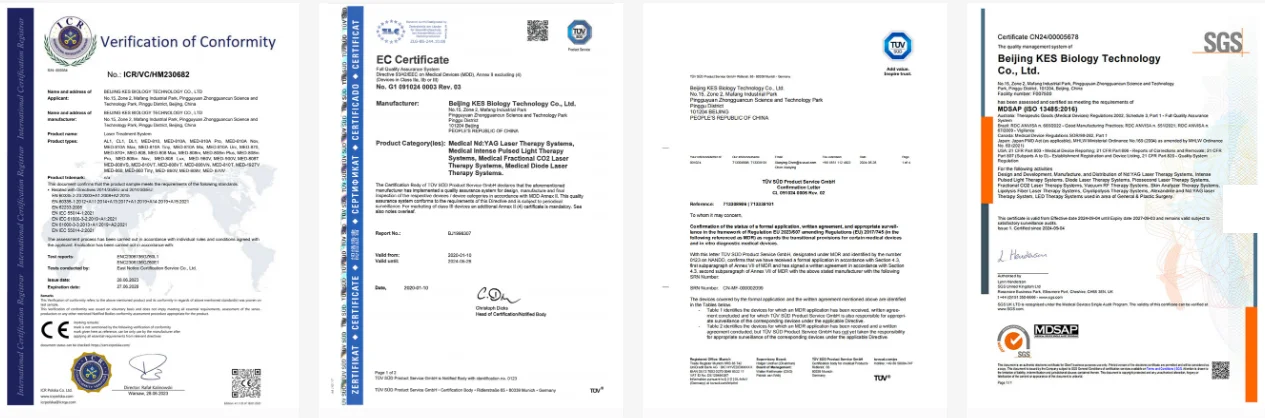
From the sector view, KES laser offers both types with global approvals like CE, TUV Medical CE, FDA, CFDA, and RoHS. The company started in 1999 with over 200 workers on eight production lines spanning 5000m². The R&D team holds skilled engineers who create fresh devices every six months based on market shifts. Our manufacturing sticks to ISO13485:2016 quality rules for steady device performance.
In the end, small clinic managers should align the choice with present needs and growth aims—matching small-scale ease with pro-level durability.
FAQ
Q: How can small clinics choose the right tattoo removal machine type?
A: Review client numbers, space options, funding limits, and service growth ideas before picking portable or vertical styles. Portable machines suit adaptable layouts; vertical ones fit high-volume work requiring ongoing reliability.
Q: Are portable tattoo removal machines powerful enough for professional use?
A: Yes. Current portable models with dual rods provide 1600–2000mJ energy via Nd:YAG technology, effective for clearing multicolored tattoos without harm to nearby skin parts.
Q: What kind of cooling system is most effective in a tattoo removal machine?
A: Water-based or mixed air-water cooling keeps temperature steady in long treatments; vertical models often have robust built-in cooling paths for demanding clinic days.
Q: How does certification affect tattoo removal machine reliability?
A: Approvals like CE or FDA verify meeting worldwide safety rules on electrical protection, light output precision, and material safety—vital when using medical lasers around patients.
Q: What maintenance practices help prolong the lifespan of the tattoo removal machine?
A: Clean filters often, test water quality in cooling tanks each week, adjust energy levels every quarter, and book yearly checks by qualified techs to avoid early part wear or sudden stops.