


Buying a laser tattoo removal machine is only part of procurement. Before a clinic releases new equipment for treatment, the receiving team should confirm that the delivered system matches the purchase order, agreed configuration, accessories, electrical requirements, and handover commitments.
This checklist is for professional tattoo removal equipment after delivery. It does not replace manufacturer instructions, local regulations, or technical calibration procedures. The goal is to verify what was ordered, confirm basic operation, record discrepancies, and decide whether the equipment can proceed to clinical handover.
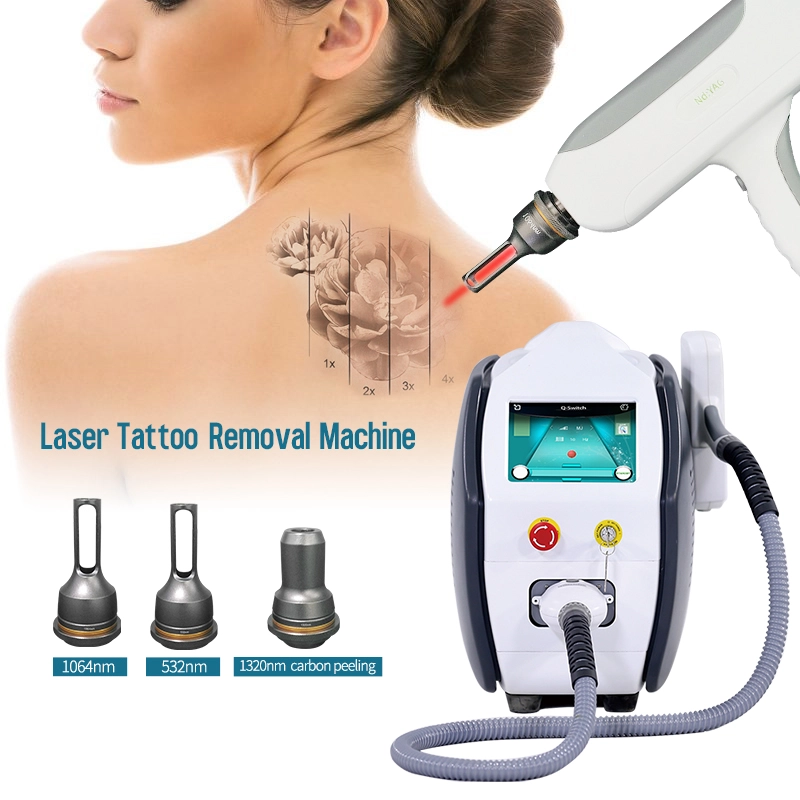
Define Acceptance Criteria Before the Tattoo Removal Equipment Arrives
Match the Purchase Order, Model, and Agreed Configuration
It is better to start the check of the business-related documents instead of checking the physical equipment. The required documents are the purchase order, the price quote, the final configuration sheet, the packing list, and the service details agreed upon. Store all these important documents in one folder – the acceptance folder.
Carefully inspect the ordered model against the delivered unit. Inspect the specific Laser Technology and wavelength configuration. Examine all treatment tips, handpieces and available spot sizes. Inspect the cooling system, power supply and any additional accessories.
Hopefully, your staff has not yet selected the appropriate technology for your clinic and you can first read the tattoo removal machine buying guide. The formal acceptance process then will be easier once you and your staff have agreed upon the necessary specifications.
Never rely on a basic online specification sheet as your passing grade. Your true standard must be the exact set-up you negotiated with the supplier.
Prepare the Acceptance Record and Required Evidence
The use of a simple worksheet to go through the process makes it easy to refer back to later.
| Acceptance item | Ordered requirement | Delivered result | Evidence | Status |
|---|---|---|---|---|
| Model and serial identity | Per PO | Record on arrival | Photo | Pass/Hold |
| Wavelengths and tips | Per configuration | Verify | Photo + screen | Pass/Hold |
| Electrical input | Per order | Check label | Photo | Pass/Hold |
| Basic startup | Normal operation | Observe | Test note | Pass/Hold |
| Documents and training | Per contract | Confirm | File list | Pass/Hold |
Who is going to sign the document and who is going to contact the supplier if any of the items do not match your order.
Inspect the Tattoo Removal Equipment at Delivery
Check Packaging, Machine Identity, and Included Accessories
Inspect the packaging and machine for obvious damage before powering on. Take clear photos of the outer carton and the machine label. Take photos of the serial number, wire connectors and handpieces. Also take photos of the tips, power cables, safety glasses, etc. listed as additional accessories.
Do not assume that all professional laser tattoo removal machines come with the same accessories. Compare the items delivered with your packing list and the items you actually ordered. If something is missing, is broken or is just different then record this before starting to install the equipment.
Verify Wavelengths, Tips, Spot Size, and Aiming System
This delivery must be exactly as described for that system. Hence, a tattoo and pigmentation system such as those supplied by KES laser, would contain a number of systems each with distinct wavelength and tip combinations. Therefore a specific model must be inspected in detail using a unique checklist for that model – and not a generic one for all systems.
The MED-860 RENO is an example of such laser systems. The two wavelengths of this system are 1064 nm and 532 nm. The laser generates a beam of 2–10 mm diameter and is supplied with a bright red aiming light. The frequency can be set between 1–10 Hz. The system is water cooled. The required power supply is a standard 220V/110V 50Hz/60Hz.
For this particular model, your acceptance checks will naturally include the printed wavelength markings and the spot-size controls. You must also test the aiming light, the cooling setup, and the electrical rating label. Buyers can easily look at our pigmentation removal systems and the MED-860 RENO while creating a customized receiving document.
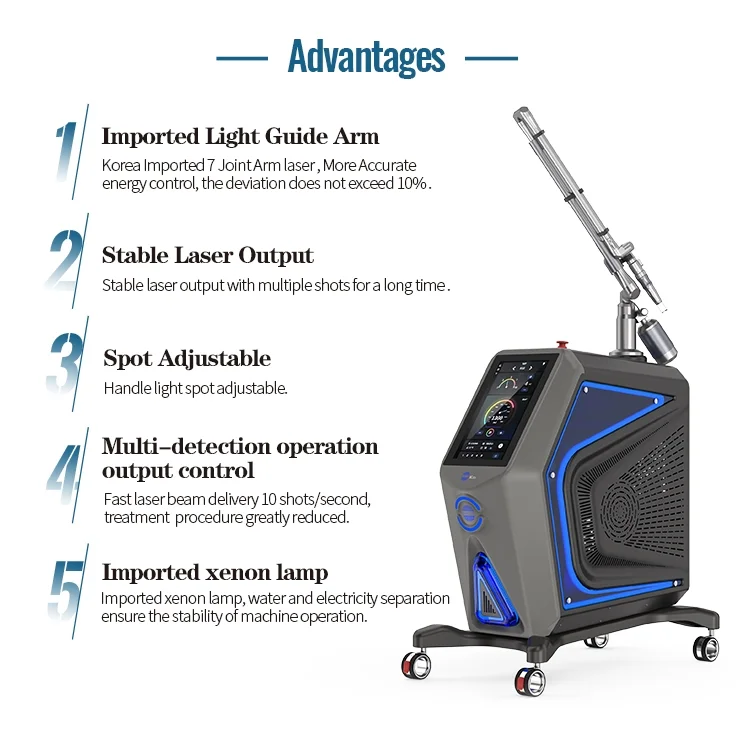
Confirm Power Supply, Cooling, and Basic System Startup
Connect up the machine after you have done a visual check on all the parts. Read the voltage and frequency off the rear label. Compare with your requested electrical setup details.
Watch the screen during the initial start up of your unit. Ensure the digital display is turning on and that the screen controls are operating swiftly. Check for loud warning alarms and review the internal cooling status according to the specific user manual for your model.
Acceptance testing should be limited to observable functions. Do not open the casing of the laser nor change internal settings deep within the laser. Repairing the laser is the function of trained technical service people and not part of a standard receiving inspection.
Perform Non-Invasive Functional Checks Before Clinical Use
Check Controls, Safety Functions, Alarms, and Cooling Behavior
Step through the standard digital menu one step at a time and verify the system enters Normal Operating Mode. Verify all buttons, indicators and Standby functions are functional. Warning Alarms and Cooling Actions must function as designed for the model being tested.
You are not testing to see what happens to patient data. Instead you are trying to identify potential problems with the mechanical parts before clinical use. If an error message suddenly appears on your screen, take a picture of the message and record what you were trying to do. Avoid simply shutting down the system and trying to repeat what you were doing before.
Review Energy and Beam Evidence Without Opening the Laser
Most inspection tests look for consistent energy output and good beam quality. But don’t let the receiving department make up their own test limits.
In some cases the purchase agreement even refers to specific rules regarding output stability or beams. Here you have to check the factory test results against your agreed criteria and include a final acceptance log which states which rule has been tested, what proof you examined and whether it met your strict order or not.
Perhaps we did not establish a specific number to go by when shipping the machine. Ask a certified service technician to verify if the machine is safe to use. A simple receiving checklist should never establish a new pass/fail criterion after the box arrives.
Record Every Discrepancy With Photos, Serial Numbers, and Test Logs
A highly effective problem log should contain the following:
- the exact model and serial number;
- the specific item under review;
- the original ordered requirement;
- the actual observed result;
- clear photo, video, or screen proof;
- the current date and the inspector’s name;
- the supplier’s reply and their planned fix.
This structured format clearly differentiates between facts and guesses. It enables purchasing departments to handle differences in the setup of a plant as well as any problems in the start-up of a plant. All relevant details are recorded without any problems.
Review Documents, Training, and Technical Handover
Verify Manuals, Certificates, Warranty, and Configuration-Specific Documents
The hardware inspection is not complete if the official handover documentation is not available.
Make sure you actually received the user manual and the final configuration page. You must also find the warranty rules, the packing list, and any relevant test papers. Check for all certification files required by your specific contract or local region. These legal documents must match your exact device and your specific country. They should never act as a vague, general brand statement.
Also check if any extra accessories or special features listed on the invoice are clearly described in the training materials.
Confirm Operator Training, Maintenance Guidance, and Support Contacts
KES laser actively supports OEM/ODM projects. For professional aesthetic devices, we also adhere to strict quality control and provide reliable after-sales service. The full range of services provided by KES laser include detailed training manual, user manual, online support and excellent after-sales engineering services.
It is also a good idea to check for any promised training and support and to actually receive all promised tools in addition to the primary support phone number or email. Make a log of the learning guides, setup guides and daily maintenance guides as well as the correct emergency contact.

Decide Pass, Conditional Acceptance, or Hold
Create a Punch List and Supplier Escalation Record
Conclude work clearly with a decision as opposed to a simple ‘machine received’ note.
- Pass: The requested configuration, accessories, and initial startup checks are fully verified. All required handover items are present.
- Conditional acceptance: A few minor issues remain open. These are carefully recorded with an assigned person and a strict deadline.
- Hold: You found a major setup difference or a missing safety tool. Perhaps an unresolved mechanical issue demands immediate supplier action before any clinical use.
Make a final punch list with problem statement and proof. Specify who is responsible for solving the problem. Also, describe how the problem will be solved and when it will be finished. The buying problem should not disappear when the equipment is put into a very busy treatment room.
FAQ
Q: What factors should be considered when purchasing a tattoo removal machine for a clinic?
A: Evaluate core technology/wavelengths to treat range of conditions required. Also consider level of service required, training required, amount of paper work required and amount of technical back up required. Create strict check list of above requirements once you have purchased unit to go through with new delivery against your original agreed requirements.
Q: How can a clinic verify the wavelengths and accessories of a laser tattoo removal machine?
A: Compare the printed machine label with the digital screen of your new medical laser. Compare the provided tips for your laser, the provided handpieces with your official packing list and check against the final configuration document. Write down any differences and check with your supplier before treating patients with the new laser.
Q: What documents should be included in a tattoo removal laser acceptance check?
A: The required documents will vary from order to order and from country to country. Typically we would send the user manual, the technical specification sheet, and the shipping list. This would also include a copy of the warranty, any relevant certificates, and records of the factory tests carried out. Additional information such as learning material and contact details for service would also be included.
Q: Should energy stability or beam profile be checked during tattoo removal laser acceptance?
A: Yes, please verify this information if it was part of your agreement. Please make sure to only use the approved test proof for the related test. Also, please only use the officially approved technical standards. DO NOT MAKE UP a passing score. And, under no circumstances should the laser casing be opened for deep internal testing. This must be done by a certified technical expert.