

Choosing the right diode laser wavelength is a key purchasing decision for medical-aesthetic clinics. The differences between 755 nm, 808 nm, and 1064 nm are not only about wavelength numbers, but also about configuration, application scope, and operational requirements. This buyer’s guide compares these three wavelength options to help clinics understand their roles, evaluate tradeoffs, and select a system that matches their actual service needs.
Read the Wavelength Label Correctly
Wavelength describes a light band, but the number alone does not define the machine. Establish whether the quotation covers a single 808 nm configuration, a handpiece combining 755+808+1064 nm, or interchangeable options. “Three wavelength” should trigger a configuration check rather than an assumption that three separate lasers are included.
In broad terms, shorter wavelengths are more strongly associated with melanin interaction near the surface, while longer wavelengths reach deeper and generally interact less strongly with epidermal melanin. These principles frame questions; they do not prescribe settings or establish individual suitability. Treatment planning belongs to trained professionals working within the device instructions and local requirements.
Compare 755, 808, and 1064 nm by Buyer Use Case
No wavelength is a universal winner. A buyer should map each option to the clinic’s expected range of hair characteristics, skin types, treatment areas, and operator competence, then ask whether the quoted platform supports that range as supplied.
755 nm: A Shorter-Wavelength Role
Within a diode combination, 755 nm is generally positioned toward stronger melanin absorption and shallower targets. This may make it relevant when a clinic expects lighter or finer hair with sufficient pigment contrast. The tradeoff is that stronger epidermal melanin interaction calls for careful client assessment, cooling, operator training, and settings within the approved instructions.
Verify that 755 nm is present in the quoted handpiece and not merely optional. Ask for the wavelength specification, handpiece identification, operating documentation, and supplier-defined limitations. Do not treat “755” on a diode quotation as evidence of a long-pulse Alexandrite laser; these are different platform categories.
808 nm: Core Diode Reference
808 nm is widely used as the central reference in diode hair-removal platforms. It is often selected for a broad professional workflow because it balances melanin interaction and penetration rather than emphasizing either end of the range. An 808nm diode laser hair removal machine may therefore suit a clinic seeking a focused configuration with simpler purchasing and training requirements.
Confirm whether 808 nm is standard, what handpiece and spot size are supplied, and which power statement applies to the diode module rather than the entire platform. An “808 diode” label cannot establish treatment speed, comfort, or clinical outcome.
1064 nm: A Longer-Wavelength Role
1064 nm is the longest wavelength in the three-band matrix. Its lower relative interaction with epidermal melanin and deeper reach make it relevant to procurement discussions involving darker skin types or deeper, coarser hair. That does not make it automatically suitable for every client, nor does it remove the need for professional assessment and conservative operation under the model instructions.
Ask how 1064 nm is produced in the offered configuration and whether it operates simultaneously with the other bands. Also verify the applicable energy, pulse-width, cooling, and interface controls instead of transferring specifications from a different machine. A diode-based 1064 nm component should not be confused with a long-pulse Nd:YAG platform simply because the nominal wavelength is the same.
|
Buyer Scenario and Wavelength |
Main Tradeoff |
Evidence to Request |
|
755 nm: lighter or finer pigmented hair |
Greater attention to epidermal melanin interaction |
Exact handpiece configuration and model instructions |
|
808 nm: broad general clinic workflow |
Balanced role does not replace client assessment |
Standard wavelength, defined power, spot size, and controls |
|
1064 nm: darker skin types or deeper coarse hair |
Lower melanin interaction may require different operating choices |
Delivery method, pulse controls, cooling, and training scope |
|
Tri-wave: mixed client and hair profiles |
Added range can increase configuration and training complexity |
Whether bands are simultaneous, fixed, selectable, or optional |
Choose Between Single and Combined Configurations
A single 808 nm system can be a rational choice when the clinic has a defined service scope, wants a straightforward operator workflow, and can support its target clients within the authorized instructions. A combined configuration may be more appropriate when the clinic expects a wider range of hair and skin profiles and has the training discipline to manage that range. More wavelengths do not automatically produce more value; value appears only when the additional capability matches real demand.
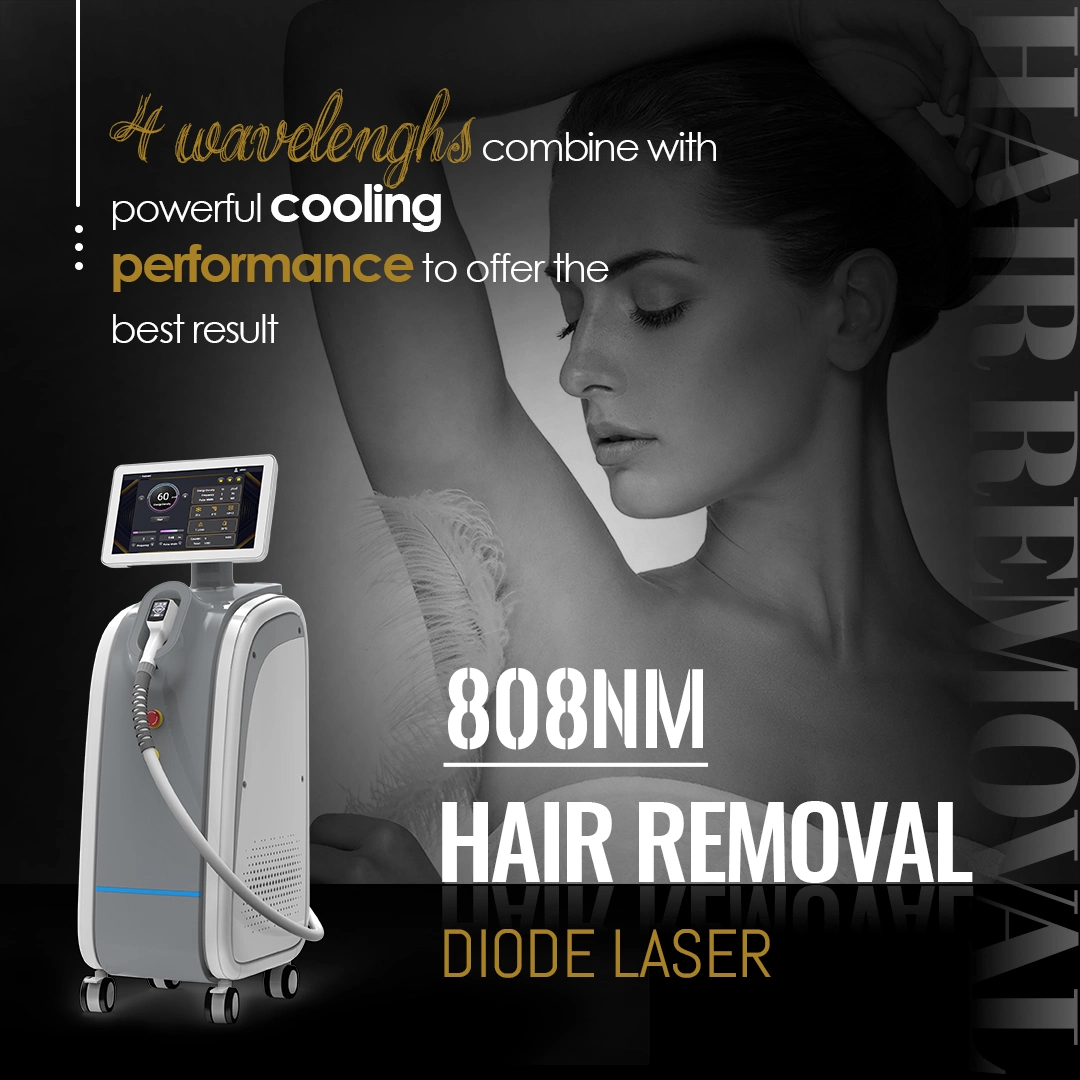
KES laser offers MED-808 diode laser hair removal machine with 808 nm as the standard wavelength and 755+808+1064 nm as an optional tri-wave configuration. Power is 500W as standard and 1200W as optional. Buyers comparing a diode laser hair removal machine should confirm the exact model, wavelength option, handpiece, power definition, and included accessories in the final quotation.
Do not rank quotations by wavelength count before normalizing them. Mark whether each band is standard, optional, simultaneous, selectable, or delivered through a separate handpiece. Record the evidence, training implications, replacement-handpiece terms, and delivered price difference. This shows whether two “triple wavelength” offers are functionally comparable.
Verify the Matrix Before Purchase
Connect the wavelength matrix to documents and support, not marketing adjectives. Request a model-specific specification sheet, user documentation, configuration code, handpiece label, quotation, warranty terms, and training scope. Ask how the delivered wavelength configuration is verified when this is material to acceptance.
Confirm who may operate the system, what training is included, and which local rules govern professional use and promoted indications. We offer training and technical support within our service options.
- Use a final pass/fail review:
- Does the configuration match the clinic’s defined client mix
- Is each wavelength’s delivery method clear
- Are operating controls and cooling identified
- Are optional items separated from standard supply
- Are warranty and support responsibilities documented?
The broader KES laser product portfolio can provide context, while the signed quotation and model documents should govern the purchase decision.
FAQ
Q: What is the difference between 755, 808, and 1064 nm in a diode laser hair removal machine?
A: The wavelengths occupy different positions in the balance between melanin interaction and penetration. In buyer terms, 755 nm is commonly evaluated for lighter or finer pigmented hair, 808 nm as a broad diode reference, and 1064 nm for darker skin types or deeper coarse hair. Individual suitability and settings still require trained professional judgment.
Q: Is an 808nm diode laser hair removal machine enough for a clinic?
A: It can be enough when the clinic has a defined client profile, a focused treatment menu, and appropriate operating instructions and training. Compare that fit with the added range and complexity of a tri-wave option. The decision should reflect actual demand, not the assumption that a larger wavelength count is always better.
Q: Does a triple-wavelength diode laser hair removal machine fire all wavelengths together?
A: Not necessarily. Product architectures differ, so buyers should ask whether 755, 808, and 1064 nm are delivered simultaneously, selected by mode, supplied through different handpieces, or offered only as optional configurations. Request the model-specific specification and quotation rather than inferring the delivery method from “three wavelength” marketing language.
Q: Is a 1064 nm diode laser hair removal machine the same as long-pulse Nd:YAG?
A: No. They may share a nominal wavelength, but a diode-based configuration and a long-pulse Nd:YAG system use different laser architectures. Buyers should compare them as separate platform categories and verify the source, pulse controls, handpiece, cooling, intended use, and training documentation for the exact model being considered.
Q: How should buyers verify an nm diode laser hair removal machine quotation?
A: Record the exact model, standard and optional wavelengths, delivery method, handpiece, defined power, spot size, pulse controls, cooling, documentation, training, warranty, and service terms. Ask the supplier to identify which specifications apply to the delivered configuration. Reject comparisons that mix base models, optional upgrades, or values from unrelated platforms.