

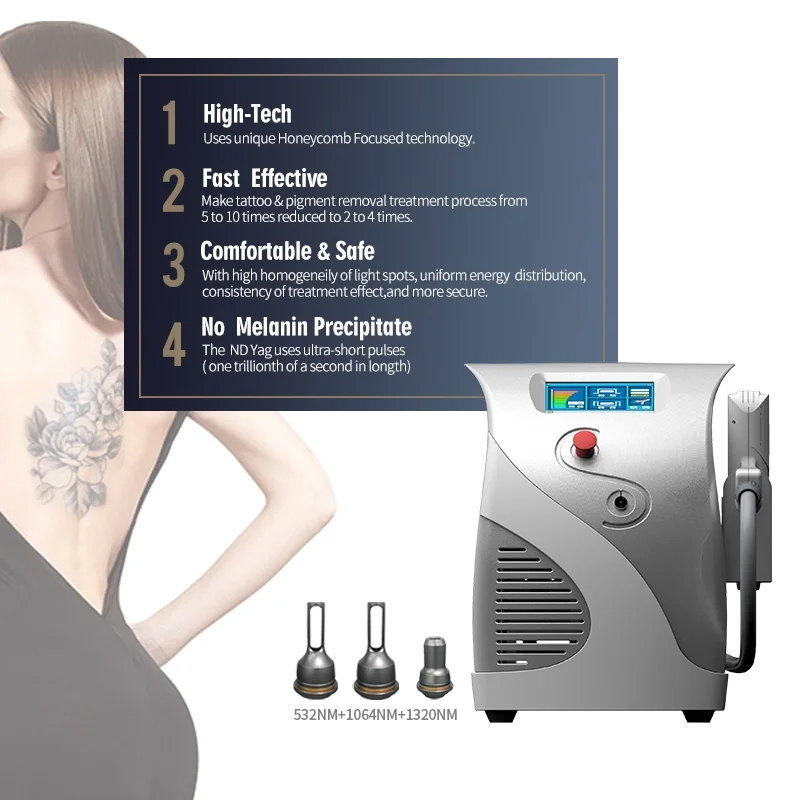
Investing in professional aesthetic equipment requires a thorough understanding of clinical technology and business economics. This guide provides comprehensive information to assist clinic owners and aesthetic practitioners in selecting the optimal Q-Switch Laser Tattoo Removal Machine. By evaluating technical specifications, clinical efficacy, and operational costs, buyers can make informed decisions that ensure patient safety and maximize return on investment.
1. Understanding the Core Problem: How Does a Q-Switched Nd:YAG Laser Work?
To effectively evaluate aesthetic equipment, it is necessary to understand the underlying clinical mechanisms. The Q-Switched Nd:YAG laser system is specifically engineered to treat tattoo colors and pigmented lesions safely.
The Science of Nanosecond Pulses and Pigment Explosion
The specific laser wavelength acts on the tattoo pigments and melanin located within the epidermis and dermis layers of the skin. The process relies on a photoacoustic effect rather than pure thermal energy. The melanin and pigments begin to swell and explode into tiny particles after absorbing this high energy laser. Following this controlled destruction, one part of the fragmented pigment will be shot out of the body, while the other parts will be gradually removed by the natural metabolism of the immune system. Utilizing a very short pulse duration of 3 to 6 nanoseconds is critical, as it helps keep the skin free of scarring during the intense energy delivery.
Targeting Specific Ink Colors with Different Wavelengths
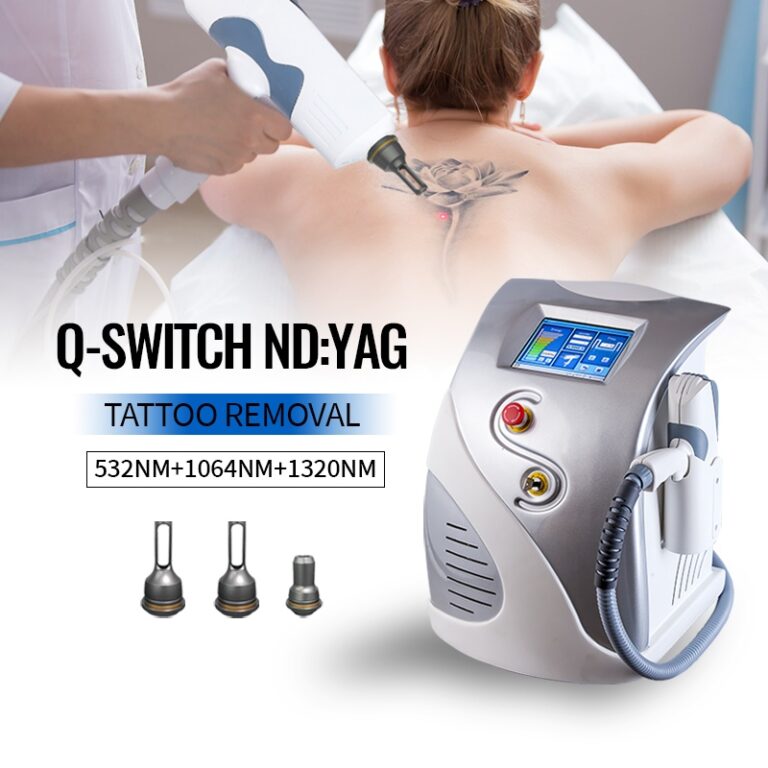
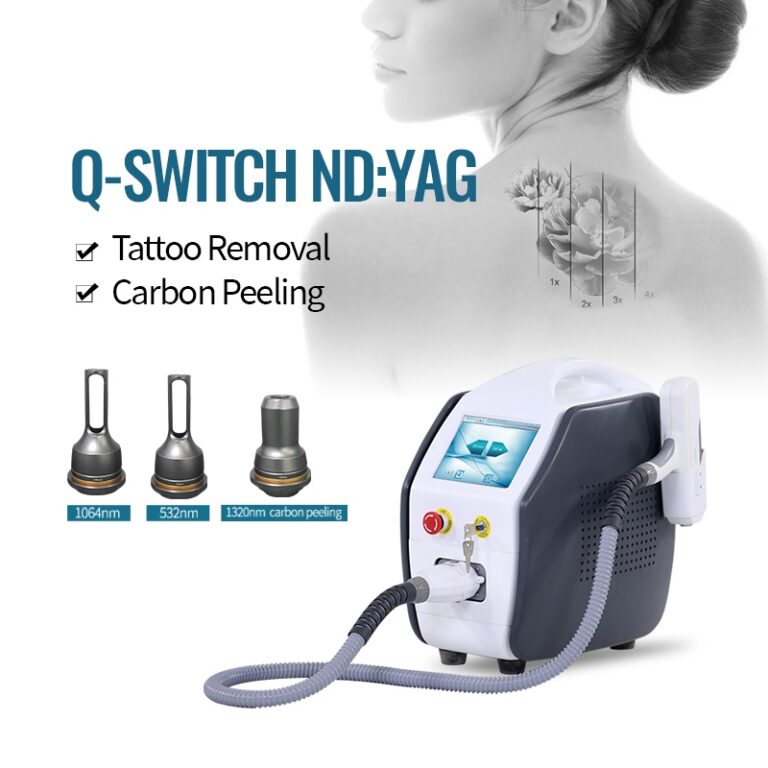
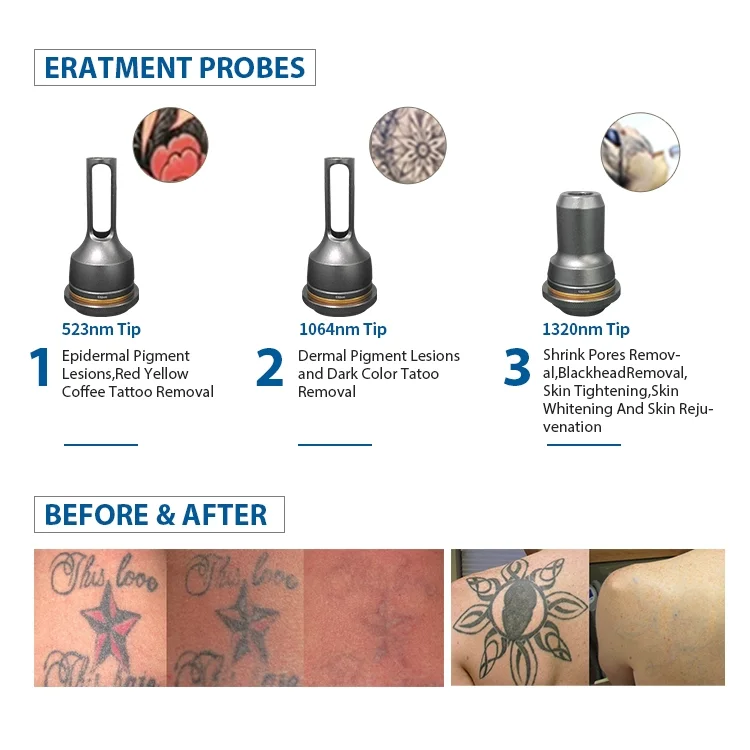
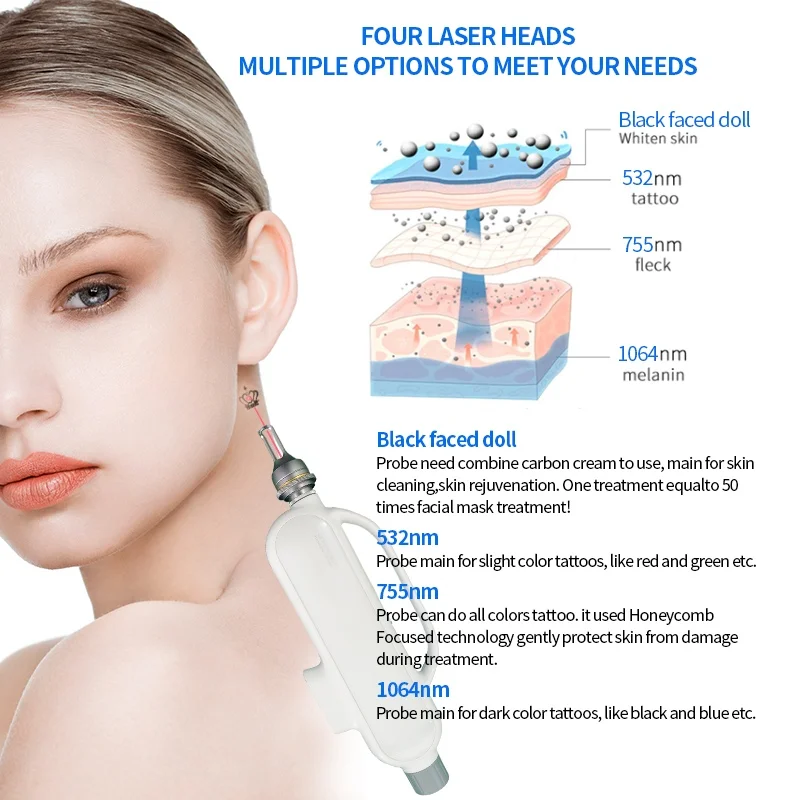
Ink clearance relies heavily on utilizing the correct wavelength for specific pigment colors. Standard professional systems utilize multiple wavelengths to address a broad spectrum of clinical indications. The 1064nm tip is professional for targeting dark colors tattoo, pigment removal, and nail fungus treatment. Conversely, the 532nm tip is specialized in colorized tattoo treatment, effectively breaking down pigments such as red, brown, and coffee. By seamlessly switching between these parameters, practitioners can formulate a customized treatment plan for complex, multi-colored tattoos.
2. Finding the Right Solution: Evaluating Professional Laser Equipment
When upgrading a clinical practice, evaluating the core components of the laser device ensures long-term operational stability and superior patient outcomes.
Technical Breakdown and Treatment Efficacy
A commercial tattoo removal machine must consistently deliver adequate energy to fragment deep dermal pigments without causing collateral thermal damage to surrounding healthy tissue. The integration of advanced optical engineering defines the difference between standard commercial units and high-end medical devices. Features such as spot size adjustability, pulse frequency, and beam homogeneity directly impact the clinical results and the overall comfort of the patient during the procedure.
Why KES laser Top-Hat and Double Rods Technology Matters
Selecting equipment that mitigates risks and accelerates treatment times is a primary business objective. KES laser integrates Top-Hat beam technology to enhance treatment safety and efficacy by ensuring a homogeneous distribution of energy across the treatment area. This top-hat beam profile minimizes epidermal damage, tissue textural changes, and the occurrence of scarring. Furthermore, KES laser utilizes Double Rods technology, featuring a dual-rod Nd:YAG laser for high-power and high-brightness applications. This engineering approach delivers a single pulse energy of 600mJ, which is twice that of a single rod, maintaining high energy density even at a larger spot size of 8mm. Consequently, this reduces single treatment time by 50% and provides optimal results for dermal pigmentation.
3. Key Specifications for Professional Decision-Making
Clinic managers must analyze specific hardware capabilities to accurately project daily patient throughput and calculate maintenance schedules.
Spot Size Adjustability and Frequency
The ability to modify the laser spot size is crucial for treating different anatomical regions. A larger spot size, adjustable from 1 to 8mm or 2 to 10mm, allows for deeper penetration and faster coverage of expansive tattoo designs. Coupled with a fast laser beam delivery of 10 shots per second, the overall treatment procedure is greatly reduced. This 10 shots per second in-motion technology reduces treatment time by 75%, allowing clinics to increase client bookings by 100% every day.
Advanced Cooling Systems and Machine Durability
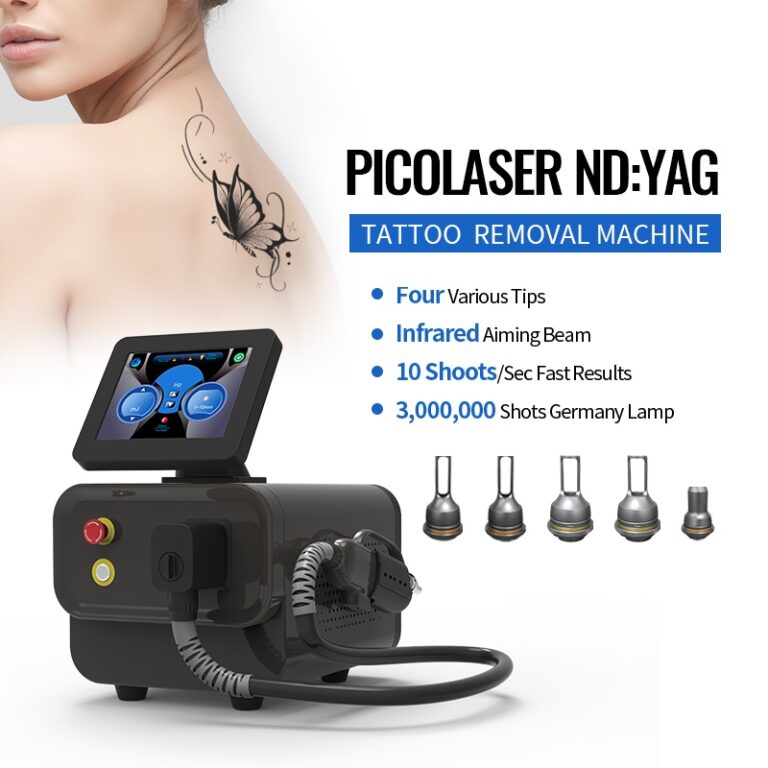
Consistent energy output generates significant internal heat, necessitating robust cooling architecture. Medical-grade systems utilize a combination of air, water, and radiator cooling systems to maintain optimal operating temperatures and ensure stable working conditions over continuous use. Additionally, the lifespan of the laser excitation lamp directly dictates operational overhead. Standard equipment generally utilizes xenon lamps with a lifetime of more than 1,000,000 shots. However, superior systems equipped with a Germany Xenon lamp offer stable energy and feature a lifetime of 3,000,000 shots, which is two times the lifespan of standard market alternatives.
4. Maximizing ROI with Your Commercial Tattoo Removal Device
A strategic equipment acquisition should offer multiple clinical applications to capture a wider demographic of aesthetic consumers, thus accelerating the return on investment.
Expanding Revenue Streams Beyond Ink Clearance
Modern aesthetic platforms incorporate interchangeable handpieces or tips to address diverse dermatological concerns. A 1320nm tip is mainly applied to deep cleaning, skin whitening, and pore shrinking, serving as a highly demanded skin rejuvenation service. Additionally, a fractional tip provides comprehensive solutions for skin reconstruction and skin rejuvenation without severe downtime. Incorporating a 755nm focus tip provides various solutions for skin whitening, acne therapy, and reducing fine lines, delivering a smooth feeling post-treatment. By offering these supplementary services, clinics can transform a single-purpose investment into a comprehensive dermal therapy center.
Comparing Standard vs KES laser Versatile Configurations
Evaluating the exact specifications helps business owners quantify the value of an advanced aesthetic workstation. The KES laser MED-810A Tiny model exemplifies this versatility by delivering a robust 1000W laser power output. It provides five different tips in one single handle, offering various treatment options for clients. Integrating the 1064nm, 532nm, 1320nm, 755nm focus, and 1064nm fractional tips helps double increase center profits with efficient results.
| Specification Indicator | Standard Portable Devices | KES laser MED-810A Tiny |
| Laser Power Output | 250W or 500W | 1000W |
| Excitation Mechanism | Single Laser Rod | Double Rods Technology |
| Handpiece Versatility | 3 Standard Tips | Total 5 Various Tips |
| Single Pulse Energy Capability | Lower Standard Output | 600mJ Single Pulse Energy |
| Internal Cooling Architecture | Basic Water Circulation | Air, Water, and Twin Radiator Cooling |
5. How to Evaluate Manufacturers and Reliable Suppliers
The operational success of a cosmetic clinic depends heavily on the reliability of the original equipment manufacturer.
Assessing Certifications and After-Sales Support
Procuring devices that adhere to stringent international regulatory standards guarantees clinical safety. It is advisable to source from manufacturers whose devices have obtained CE, TUV Medical CE, FDA, CFDA, and RoHS certifications. These certifications denote a strict quality testing process that ensures safe treatment and stable working. A proficient supplier will also prioritize technical continuity. An established after-sales service department provides 24 hours online service and communicates in multiple languages, ensuring any problem should be resolved within 48 hours. Furthermore, solutions with manuals or training videos should be provided within 48 hours to minimize any potential clinic downtime.
6. Frequently Asked Questions (FAQ)
Q: What is the difference between standard single rod and Double Rods technology for tattoo removal?
A: The core difference lies in energy generation and treatment efficiency. Dual-rod Nd:YAG laser systems are designed for high-power and high-brightness applications. They can deliver a single pulse energy of 600mJ, which is twice that of a single rod, maintaining high energy density even at a larger 8mm spot size. This technological enhancement allows practitioners to reduce single treatment time by 50 percent.
Q: How many sessions are typically required with a commercial pigment removal machine?
A: The required number of sessions depends on ink depth, age, and color. However, utilizing advanced devices with double energy handpieces especially focuses on dermal pigment and colorful tattoo removal, which yields permanent results and means fewer sessions are needed. In certain clinical applications utilizing specific picosecond technology, pigmentation removal can be achieved in 3 sessions.
Q: Is a portable Q-Switched Nd:YAG laser as effective as a vertical system?
A: Yes, provided the unit integrates high-grade components. Portable devices like the AL1 feature an ABS casing modular design for fast maintenance. They use a laser rod with 1000mJ energy, delivering high efficiency and saving 50 percent treatment time. For a detailed footprint and clinical capability comparison, consult this Portable vs. Vertical Tattoo Removal Machines Guide.
Q: What specific colors of ink can a 1064nm wavelength remove effectively?
A: Wavelength selection is strictly tied to ink color absorption. The 1064nm tip is professional for targeting dark colors tattoo, pigment removal, and nail fungus. For treating lighter or warmer pigments, a 532nm tip is specialized in colorized tattoo treatment, such as red, brown, and coffee colors.
Q: How long is the lifespan of a professional laser equipment lamp?
A: Consumable longevity impacts the operational overhead of the clinic. The lifetime of a standard xenon lamp utilized in these devices is typically more than 1,000,000 shots. Premium configurations utilizing a Germany Xenon lamp provide stable energy and feature an extended lifetime of 3,000,000 shots, ensuring durability and reduced maintenance costs.