

An EMS body slimming machine can add a muscle-focused service to a clinic’s body contouring menu, but machines that look similar on a sales page can differ substantially in output, applicator configuration, controls, support, and operating cost. For buyers, the useful question is whether the platform fits treatment goals, workflow, and the business model.
What Is an EMS Body Slimming Machine and How Does It Work?
EMS vs HIFEM: Understanding the Technology Behind Muscle Stimulation
EMS is often used as a broad market term for muscle-stimulation equipment. HIFEM, by contrast, refers to high-intensity focused electromagnetic energy designed to induce strong involuntary muscle contractions. These contractions go beyond normal voluntary contractions and support muscle remodeling and body sculpting.
For clinics, the distinction matters. A product name alone does not tell you how energy is generated or delivered. Before buying, check the actual technology, frequency range, field intensity, handpiece design, and operating modes.
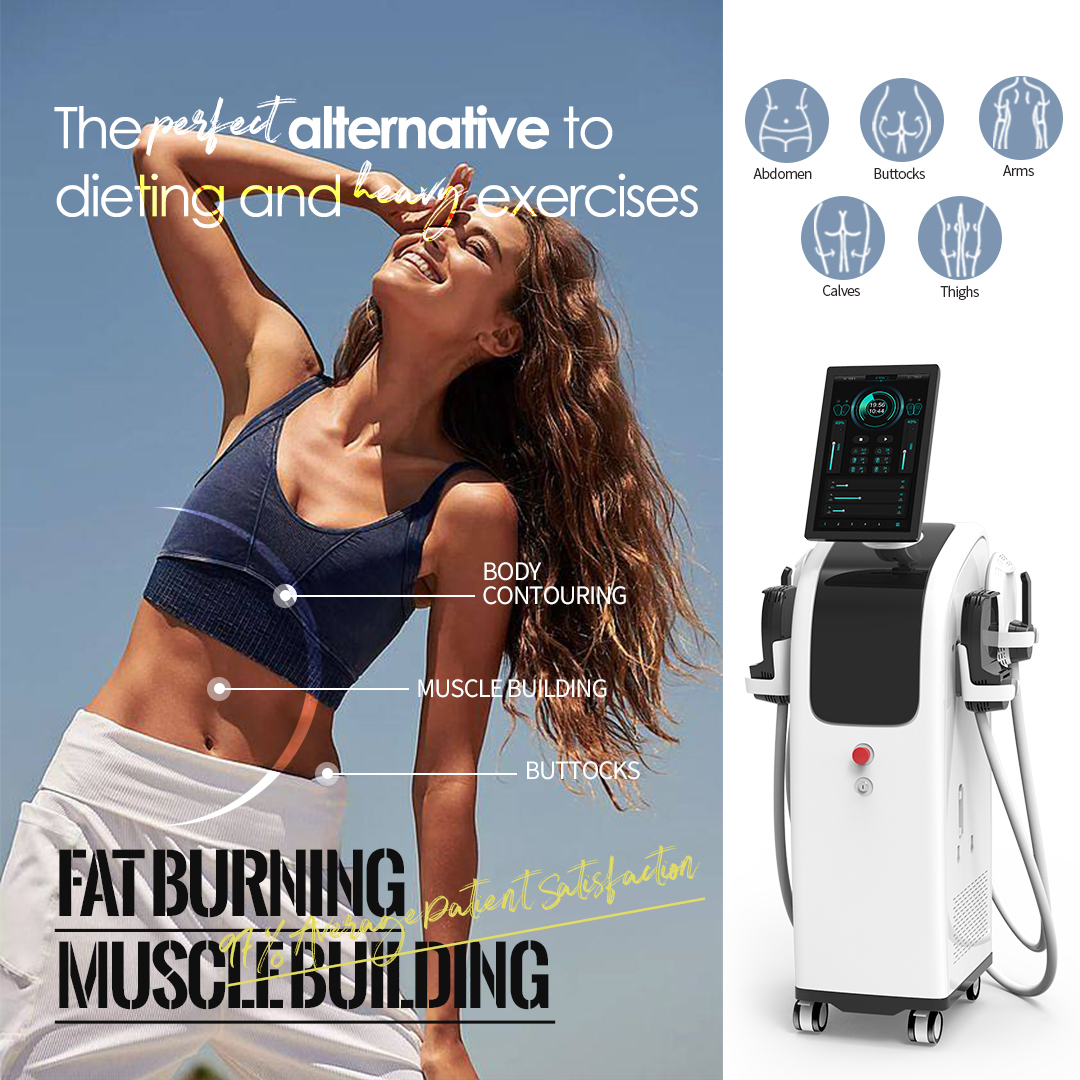
What Treatment Areas and Client Goals Can EMS Body Sculpting Address?
Professional electromagnetic sculpting is usually positioned around muscle toning, definition, and body contouring rather than general weight loss. Common treatment planning focuses on areas such as the abdomen, buttocks, arms, thighs, and calves.
Client screening and expectation setting remain important. Someone seeking muscle definition has a different goal from a client focused on a localized fat pocket.
Which Specifications Actually Matter When Comparing EMS Body Slimming Machines?
2-Handle vs 4-Handle EMS Machines: Why Applicator Configuration Matters
Applicator count affects more than appearance. It changes how many areas can be addressed at once and how easily a clinic can build treatment packages.
A two-handle system may suit a smaller practice. A four-handle system offers more flexibility for simultaneous placement as appointment volume grows.
When comparing configurations, ask:
- Can all applicators operate at the same time?
- Are the handpieces suitable for the body areas in your menu?
- Can parameters be adjusted in a practical way during treatment?
- Does the layout reduce setup time for staff?
Tesla, Frequency and Energy Output: Is a Higher Number Always Better?
Tesla is commonly used to describe magnetic field strength, but the highest number on a brochure should not be the only buying criterion. Frequency range, output stability, applicator construction, parameter control, and the way energy is delivered are equally relevant.
Buyers should compare field intensity with frequency, rated power, user controls, and quality testing. A powerful machine that is difficult to operate or support may be a poor daily-use choice.
Controls, Treatment Modes and Workflow Features to Check Before Buying
A treatment platform should be easy for trained staff to set up repeatedly. Screen layout and handpiece control affect daily workflow.
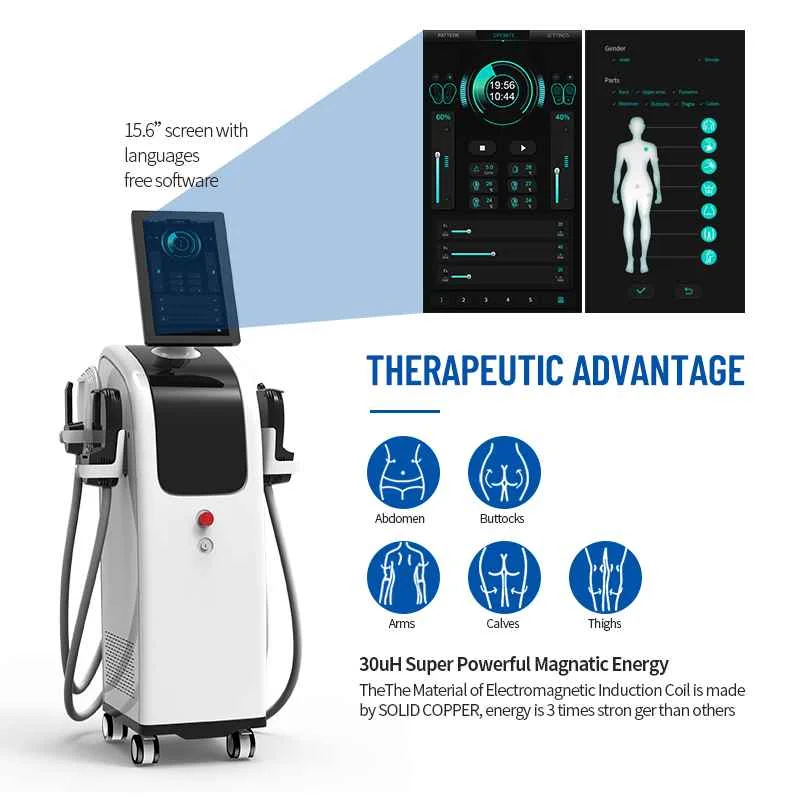
For example, KES laser’s MED-380NEO EMS Body Shaping Machine uses HIFEM technology with four handpieces, a 15.6-inch touch screen, 13 Tesla energy, 4000VA output power, and a 5–100Hz frequency range. These specifications make it easier for a buyer to evaluate the machine as a complete working platform rather than judging it by a single headline figure.
EMS Body Slimming Machine vs Other Body Contouring Technologies: What Should Clinics Choose?
EMS Body Slimming Machine vs Cryolipolysis
The two technologies are not direct substitutes.
| Comparison point | EMS/HIFEM sculpting | Cryolipolysis |
|---|---|---|
| Primary focus | Muscle stimulation and contouring | Localized fat reduction |
| Energy approach | Electromagnetic stimulation | Controlled cooling |
| Applicator strategy | Muscle-area placement | Fat-pocket placement |
| Menu role | Toning and definition | Fat-focused contouring |
Cryolipolysis uses selective cooling with vacuum-assisted tissue capture in many systems, so its treatment logic differs from electromagnetic muscle stimulation.
EMS vs RF and Other Body Contouring Machines
RF, vacuum, rollers, infrared light, LED, cavitation, and electromagnetic stimulation target different treatment goals. RF-based body systems may be selected when skin appearance, tissue heating, cellulite, or contouring is part of the service concept, while HIFEM is centered on muscle stimulation. Multi-technology body shaping systems, for example, may combine vacuum, mechanical rollers, bipolar RF, infrared light, and LED.
A technology portfolio should therefore be built around treatment objectives, not around devices sharing a “slimming” label.
What Does an EMS Body Slimming Machine Cost to Run—and Can It Deliver ROI?
Look Beyond Purchase Price: Total Cost of Ownership
Machine price is only the first line of the budget. A serious comparison should include shipping, installation, staff training, warranty coverage, replacement parts, maintenance, energy use, and potential downtime.
A cheaper platform can become expensive if parts are difficult to obtain or technical support is slow. Buyers should therefore request clear information about warranty terms, troubleshooting procedures, spare-parts availability, and post-purchase training before comparing final quotations.
How Treatment Capacity and Package Pricing Affect EMS Machine ROI
ROI depends on utilization, not on a brochure promise. A simple planning formula is:
Monthly treatment revenue = sessions per day × average session price × operating days
Then subtract direct treatment costs and allocate equipment, staff, marketing, and service expenses.
Mini case: suppose a clinic has enough demand for multiple EMS appointments each day. A four-applicator workflow may increase scheduling flexibility, but only if the clinic can consistently fill those slots. If demand is low, extra capacity does not automatically create profit.
How to Choose a Reliable EMS Body Slimming Machine Supplier
What to Ask a Manufacturer Before You Purchase
Use a purchasing checklist rather than relying on a sales presentation:
- What is the exact stimulation technology and specification range?
- How many handpieces operate simultaneously?
- What quality-control steps are completed before shipment?
- Which certifications apply to the specific device and target market?
- What training, manuals, troubleshooting, and warranty support are included?
- How are spare parts and repairs handled?
- Is OEM/ODM support available for distributors?
A clear answer to these questions reduces uncertainty before the machine reaches your treatment room. Certification should also be checked at device level rather than assumed from other products in a supplier’s portfolio.
What KES laser Offers Clinics, Distributors and Aesthetic Equipment Buyers
At KES laser, we have worked in medical and aesthetic equipment since 1999. Our manufacturing process includes incoming material inspection, ERP-based material management, controlled production, energy-output and working-stability testing, and packaging before delivery. Our supply chain follows ISO13485:2016 quality-management requirements.
For distributors developing their own equipment lines, we also support OEM and ODM projects covering industrial design, mechanical design, software design, functional design, interface design, and logo design.
After purchase, support is just as important as machine specifications. Our after-sales department includes 12 engineers and provides online assistance in multiple languages. Troubleshooting solutions can be supplied through manuals or videos, while training and marketing materials are also available for partners.
For professional buyers evaluating an EMS body sculpting platform, equipment performance and post-purchase support need to work together.
Frequently Asked Questions About EMS Body Slimming Machines
Q: How does an EMS body slimming machine work?
A: An EMS body slimming machine uses controlled stimulation to produce involuntary muscle contractions in targeted areas. HIFEM systems use high-intensity focused electromagnetic energy, so professional buyers should confirm the underlying technology rather than relying only on the term “EMS.”
Q: What is the difference between an EMS body slimming machine and a HIFEM body sculpting machine?
A: EMS is often used as a broad category term, while HIFEM describes a high-intensity focused electromagnetic approach. When comparing professional equipment, look at the actual stimulation technology, field strength, frequency range, applicator configuration, power, and user controls.
Q: How many handles should a professional EMS body slimming machine have?
A: The answer depends on treatment volume and workflow. Two handles may be sufficient for a smaller practice, while four handles can provide more simultaneous placement options. When comparing machines, check whether all handpieces can work together and whether the configuration fits the areas you plan to treat.
Q: How much does an EMS body slimming machine cost for a clinic or med spa?
A: Pricing varies by configuration, technology, supplier, and included service. Compare the total ownership cost, including shipping, training, warranty, maintenance, spare parts, technical support, and possible downtime, instead of evaluating the purchase price alone.
Q: Is an EMS body slimming machine better than cryolipolysis for body contouring?
A: Not universally. EMS/HIFEM is centered on muscle stimulation and contouring, while cryolipolysis is a cooling-based approach for localized fat reduction. The better choice depends on client goals, your current treatment menu, available budget, and expected equipment utilization.