

Entering the aesthetic medicine landscape in 2026 requires a careful approach to technology acquisition. As patient expectations reach new heights and regulatory environments become more demanding, selecting the appropriate optical systems for ink erasure remains critical for clinical success. This comprehensive guide explores the essential factors clinic owners must evaluate to make an informed and profitable purchasing decision.
1. Why Upgrading Your Professional Tattoo Removal Laser Equipment Matters
Remaining competitive in the rapidly advancing field of medical aesthetics means recognizing when older systems no longer serve the business model. Outdated hardware not only slows down treatment times but also limits the demographic that practitioners can safely treat. This situation ultimately caps potential revenue.
The Growing Demand for Tattoo Removal in Med Spas
By 2026, the cultural landscape surrounding body art has shifted significantly. While the application of body art remains popular, the demand for modification, fading for cover-ups, and complete erasure has increased sharply. Patients experience lifestyle changes, enter new professional fields, or simply outgrow older designs. Modern patients are also highly educated about aesthetic procedures. These patients actively research the best tattoo removal technology online before booking a consultation. If a medical spa still uses equipment from a decade ago, potential clients will seek out competitors who advertise faster clearance rates and reduced thermal discomfort. Meeting this surging demand requires investing in modern platforms. Modern platforms can deliver consistent, reliable, and comfortable outcomes.
How High-Quality Equipment Boosts Clinic ROI
Upgrading to premium medical aesthetic hardware is a strategic financial decision that directly impacts a clinic’s bottom line. The return on investment comes from multiple operational efficiencies. Consider a standard case study of a specialized dermatology clinic that upgraded its primary device in early 2026. The clinic reduced the average session duration by twenty-five percent due to larger spot sizes and higher repetition rates. Faster sessions allowed practitioners to schedule three additional patients per day. Enhanced efficacy meant patients saw visible fading sooner. Visible fading led to enthusiastic word-of-mouth referrals. The reduction in epidermal damage drastically lowered the required post-care interventions. When the increased daily patient volume is calculated alongside the premium pricing justified by superior technology, the initial capital expenditure for top-tier clinical machinery is often fully recovered within the first few quarters of operation.
2. Types of Tattoo Removal Lasers: Which is Best for Your Clinic?
Understanding the underlying physics of light-tissue interaction is mandatory before selecting a system. Different optical configurations serve entirely different clinical purposes.
Q-Switched Nd:YAG Lasers: The Industry Standard
For many years leading up to 2026, nanosecond technology has been the trusted workhorse of the aesthetic industry. These systems operate on the principle of delivering massive bursts of optical energy in billionths of a second. This rapid delivery creates a localized photothermal and photoacoustic effect that shatters the targeted pigment into smaller fragments. The human body’s lymphatic system then gradually flushes these fragments away over several weeks. Q-switched platforms are highly regarded for reliability, straightforward maintenance, and exceptional ability to clear dark pigments such as black and dark blue. For a newly established clinic, this technology offers an outstanding balance of affordability and proven clinical efficacy.
Picosecond Lasers: The Advanced Best Tattoo Removal Technology
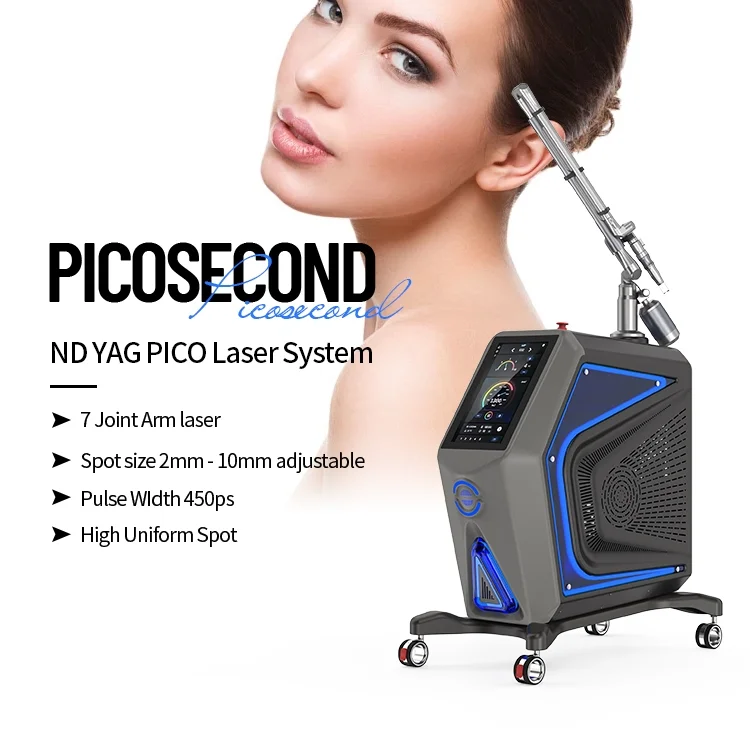
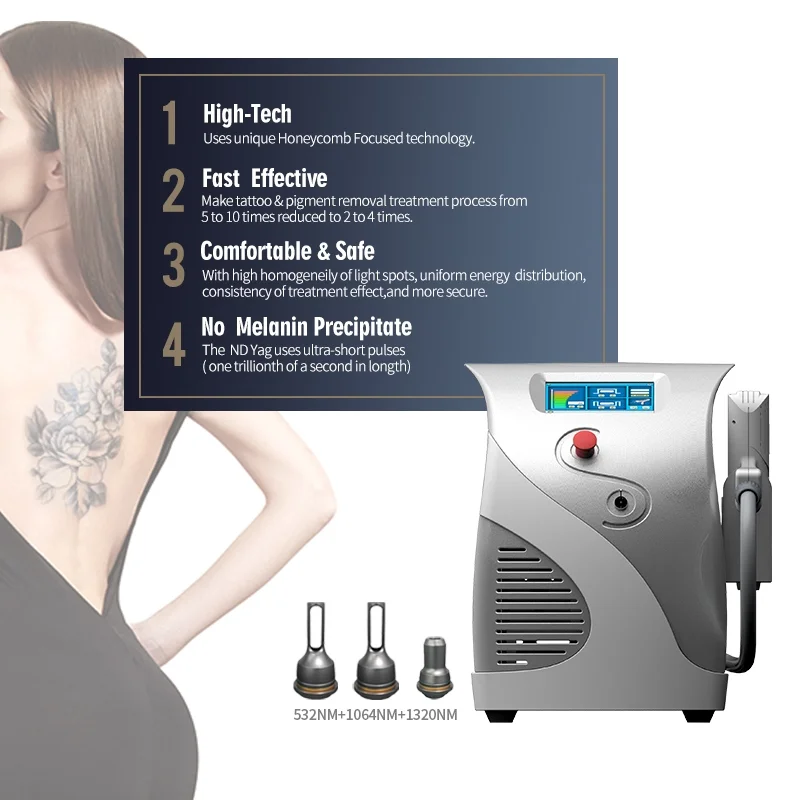
Representing the current pinnacle of dermal pigment clearance, picosecond technology compresses optical energy into trillionths of a second. This extreme compression shifts the mechanism of action almost entirely to a pure photoacoustic shockwave. Instead of breaking ink into small fragments like a nanosecond pulse, the picosecond pulse pulverizes the pigment into microscopic dust. The immune system can dispose of these microscopic particles much more efficiently. Efficient disposal translates to fewer required sessions for the patient. Additionally, the reduced thermal transfer means the surrounding healthy tissue experiences significantly less trauma. Less trauma minimizes recovery time and lowers the risk of adverse side effects.
Choosing the Right Wavelengths (1064nm, 532nm, 755nm)
No single wavelength of light is capable of treating every color of the spectrum. Different chemical pigments absorb specific wavelengths while reflecting others. A multi-wavelength system provides greater flexibility for treating multicolored tattoos, although treatment response also depends on ink composition, skin type and laser parameters.
| Wavelength | Commonly Responsive Ink Colors | Skin-Type Considerations |
| 1064 nm | Black, dark gray, dark blue | Suitable for a broad range of skin types; generally preferred and comparatively safer for darker skin tones |
| 532 nm | Red and orange; some yellow pigments may respond variably | Best suited to lighter skin tones; greater caution is required for darker skin |
| 755 nm | Green, blue, teal and some black inks | Best suited to lighter skin types; use cautiously in medium-to-dark skin because of pigmentary-change risk |
To operate a truly comprehensive aesthetic practice, clinic owners must ensure the chosen hardware incorporates at least the 1064nm and 532nm wavelengths. The 755nm or 694nm spectrums serve as valuable additions for complex, multi-colored artwork.
3. What Factors Should Be Considered When Purchasing a Tattoo Removal Machine for a Clinic?
Beyond the fundamental physics, selecting the correct supplier and evaluating the specific engineering metrics of a machine are crucial steps in the procurement process.
FDA Clearance, Safety, and Medical Compliance
Operating without properly certified equipment is a massive liability in today’s regulatory environment. Regulatory bodies enforce strict standards to ensure patient safety. Purchasing hardware with recognized clearances guarantees that the device has undergone rigorous clinical testing. These certifications verify that the energy output matches the software display. The certifications also confirm that the internal cooling mechanisms function correctly and the optical beam profile is uniform. A uniform beam profile is essential because a non-uniform beam can create dangerous hotspots. Hotspots lead to severe thermal burns and permanent textural changes to the patient’s skin.
Treatment Speed and Efficacy on Various Skin Types
A clinic’s demographic reach is determined by the ability to treat diverse skin tones safely. Practitioners rely on the Fitzpatrick scale to categorize skin types and determine appropriate treatment parameters. Systems designed with adjustable pulse widths and customizable spot sizes allow the operator to tailor the energy delivery precisely to the patient’s melanin concentration. High-frequency operation allows the practitioner to complete treatments rapidly. A fast treatment not only increases clinic throughput but also significantly reduces the duration of physical discomfort experienced by the patient.
Manufacturer Support, Warranty, and Training
Purchasing complex aesthetic hardware is not a one-time transaction. The purchase marks the beginning of a long-term business relationship. This is where the KES laser advantage is a critical factor for clinic owners. We distinguish ourselves in the 2026 market by offering an unparalleled ecosystem of after-sales support. The comprehensive clinical training protocols ensure that staff members are fully educated on safe operating procedures, specific wavelength applications, and patient contraindications. Because KES laser is a direct manufacturer with a long-standing history in medical aesthetics, the company provides robust warranties and direct access to original replacement components.
4. Top Medical Devices for Tattoo Removal: KES laser Recommended Solutions
Identifying the exact category of equipment that aligns with clinical objectives is the final step in the buying journey.
High-Performance Q-Switched Systems
For practices focused on extreme reliability and a rapid return on investment, the robust Q-switched platforms engineered by KES laser represent an ideal solution. A major advantage of KES laser systems is the integration of premium, imported articulated arms. These precision-engineered optical arms ensure that there is virtually no energy loss as the laser light travels from the machine’s core to the handpiece. This setup guarantees a perfectly uniform flat-top beam profile upon impact with the skin. The uniform profile is critical for preventing hyperpigmentation. Additionally, KES laser incorporates advanced internal water and air cooling architectures. These architectures allow the machine to operate continuously in a busy clinic environment without suffering from thermal shutdown or energy degradation.
Next-Generation Picosecond Laser Machines
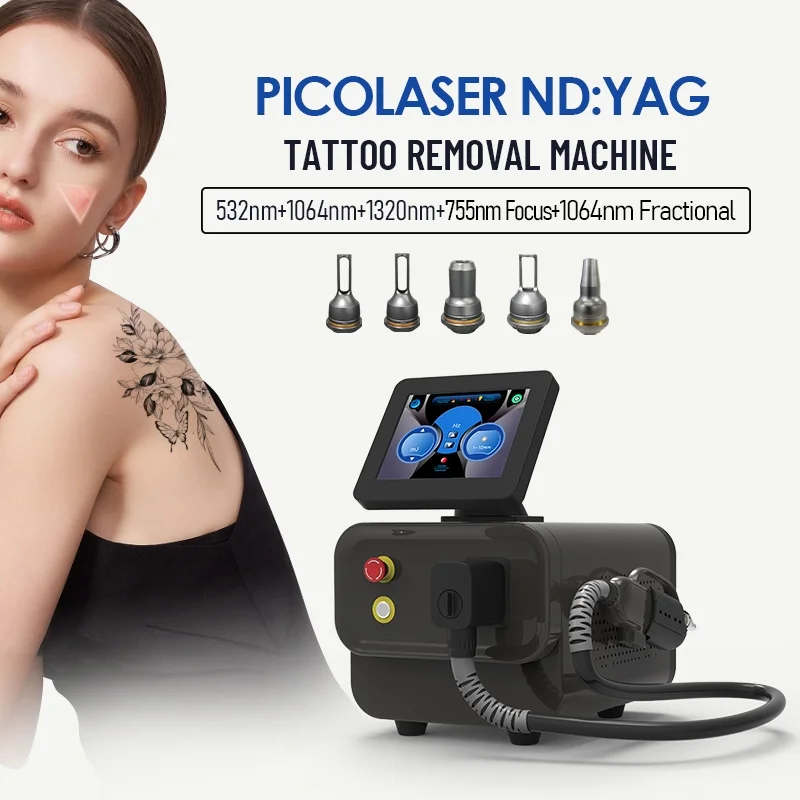
When a clinic decides to position itself as a premium, elite destination for complex skin clearing, upgrading to next-generation picosecond architecture is essential. These modern platforms utilize immense peak power to shatter the most stubborn and deeply embedded professional inks. By investing in this top-tier technology, medical spas can confidently accept patients who have failed to see results at other facilities. These advanced systems often feature smart interfaces, automated spot size recognition, and precise depth control. The features empower the practitioner to focus entirely on the patient’s clinical response rather than adjusting cumbersome manual settings.
FAQ
Q: What is the best laser for professional tattoo removal in 2026?
A: The optimal choice in 2026 depends heavily on the specific needs of the medical spa and the target patient demographic. High-powered picosecond platforms and reliable multi-wavelength Q-switched Nd:YAG systems are widely recognized as the superior choices in the industry. These highly engineered devices offer the exact pulse durations and peak power necessary to safely shatter complex pigment structures without causing thermal damage to the surrounding healthy tissue.
Q: What factors should be considered when purchasing a tattoo removal machine for a clinic?
A: Clinic directors must evaluate the availability of multiple optical wavelengths, primarily the 1064nm and 532nm spectrums, to effectively handle a diverse range of ink colors. Beyond the clinical specifications, one must carefully review safety certifications, spot size adjustability, maximum energy output, and the manufacturer’s proven commitment to ongoing technical maintenance and clinical education.
Q: How do I choose between different types of tattoo removal lasers?
A: The decision should be strictly based on the primary target audience and the geographic market. If practitioners frequently treat patients with standard black or dark blue inks on a wide variety of skin tones, a standard nanosecond Nd:YAG system is highly effective and economically sound. If the intention is to treat multi-colored, vibrant designs, including notoriously stubborn greens and light blues, stepping up to a high-end photoacoustic picosecond device is the necessary path.
Q: What makes professional tattoo removal laser equipment different from cheap alternatives?
A: Authentic medical-grade platforms utilize sophisticated internal components, such as high-quality crystals and precision lenses, to guarantee stable energy delivery and uniform beam profiles over thousands of hours of use. Cheap, non-certified alternatives frequently suffer from extreme energy fluctuations. These fluctuations create dangerous thermal hotspots on the epidermis that inevitably lead to permanent scarring, severe burns, and unpredictable clinical outcomes that will quickly destroy a clinic’s reputation.