


Many individuals wonder, “Does laser tattoo removal hurt?” The process can certainly bring some discomfort. In fact, numerous clients describe the feeling as painful. However, this sensation is typically quite brief. This brevity happens because the equipment delivers energy in very fast pulses rather than in a constant stream. Furthermore, there is no single pain score that applies to everyone. Factors such as ink density, color, and body location play major roles. Additionally, skin sensitivity, chosen settings, cooling methods, and the skill of the operator all shape the final experience.
For modern clinics, a more practical question arises. They must discover how to target pigment efficiently while limiting unnecessary heat. They also need to minimize exposure time and establish realistic expectations for clients. Therefore, a professional Tattoo Removal Laser must be judged as part of an entire treatment plan. This comprehensive approach includes thorough consultations, careful parameter control, adequate cooling, proper practitioner training, and reliable aftercare.
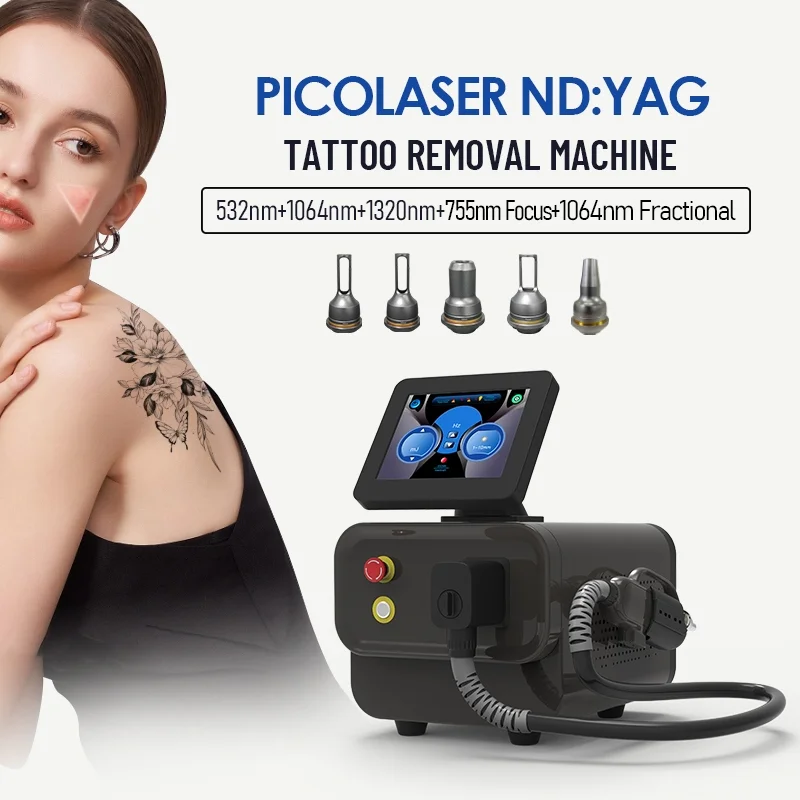
Does Laser Tattoo Removal Hurt?
What Does Laser Tattoo Removal Feel Like?
When clients ask what laser tattoo removal feels like, they often hear comparisons to quick snapping. Some liken it to hot pinpricks or brief bursts of stinging. A tiny, faded piece of body art may feel completely different from a massive, heavily saturated design.
The main discomfort generally hits right at the exact moment each pulse strikes the skin. Because the handpiece constantly moves across the targeted area, the feeling arrives in rapid intervals. It does not feel like constant pressure. Some individuals handle this sensation easily. Meanwhile, others might require extra cooling or a slower pace. They might also need clinically suitable pain-management options.
Clinics should never market the procedure as entirely painless. A solid consultation clearly explains what the client might feel. It outlines which comfort options exist. It also clarifies why the actual experience can shift from one session to the next.
Does Tattoo Removal Hurt More Than Getting a Tattoo?
Many people ask, does tattoo removal hurt more than getting a tattoo? Getting a tattoo involves moving needles through the skin repeatedly over a long stretch of time. On the other hand, laser removal sends quick, high-energy pulses directly into the pigment. Certain clients find the laser feeling sharper. Yet others find it much easier to bear. This is because the active treatment phase generally takes far less time.
| Treatment stage | Possible sensation | Typical clinic response |
|---|---|---|
| During laser pulses | Snapping, heat, or stinging | Cooling, pacing, and communication |
| Immediately afterward | Warmth or tenderness | Cool compresses and aftercare guidance |
| Following days | Redness, swelling, or sensitivity | Monitoring and appropriate skin care |
Importantly, pain must not serve as an indicator of treatment quality. Using excessive energy can raise the chance of bad skin reactions. Conversely, settings that remain too low might fail to break up the pigment properly. The real goal is reaching a safe clinical endpoint, rather than causing the strongest possible feeling.
How Long Does Discomfort Last?
Clients frequently wonder how long tattoo removal pain lasts. The sharpest feeling usually happens right during the pulse delivery. After the session, warmth or tenderness may linger. In addition, temporary redness, minor swelling, blistering, or crusting can show up as the skin starts to heal.
The length of these skin reactions depends on the tattoo itself and the specific area treated. It also depends on the selected parameters and the individual’s unique healing speed. Clinics must hand out written aftercare guides. These guides should clearly separate normal short-term reactions from serious symptoms that demand a professional check.
If a client experiences severe pain, growing swelling, or signs of infection, they need immediate attention. Any symptoms that steadily get worse must be looked at by the treating professional.
Why Are Some Treatments More Painful Than Others?
Tattoo Size, Ink Density, Color, and Depth
Bigger tattoos naturally expose more skin during a single visit. Thick ink, multiple-layered cover-ups, and very deep pigment can require a much more involved treatment strategy.
For example, a tattoo featuring heavy black shading might react entirely differently compared to a delicate fine-line piece. Multicolored designs often need more than just one wavelength. This happens because distinct colors absorb the light energy in different ways. Furthermore, the age of the tattoo, the depth of the pigment, and the thickness of the lines matter. Past treatment history can also greatly impact the total session time and the level of laser tattoo removal patient comfort.
Q-switched Nd:YAG laser systems usually rely on 1064nm for dark colors. They switch to 532nm for shades like red, brown, and coffee. Picking the right wavelength lets the operator target the ink accurately. This prevents them from using needlessly harsh settings.
KES laser offered configurations might also feature a 1320nm tip. However, this specific wavelength is mostly meant for carbon peeling and deep cleansing. It handles skin whitening and pore tasks, rather than primary ink clearance.
Body Location, Skin Sensitivity, and Pain Tolerance
Body parts with thin skin or very little fat over the bone often feel far more sensitive than meatier spots. Therefore, tattoos located near the ankles, fingers, ribs, or joints might cause a much stronger feeling. The wrists and feet act similarly.
Personal pain tolerance holds equal importance. Feelings of anxiety, a severe lack of sleep, or bad past experiences can alter perception. A client’s overall expectations also heavily shape how they view the discomfort.
A smart practitioner will talk about these factors during the first meeting. This chat helps the client see why one specific body area or appointment might feel different from another. It also stops the false idea that more intense pain automatically leads to better ink fading.
Treatment Settings and Operator Technique
Client comfort depends on much more than just the equipment category. Operators have to think about wavelength, fluence, and pulse width. They must also manage spot size, repetition rate, overlap, and handpiece motion. Finally, they must watch the visible endpoint.
Three main operating rules stand out as vital:
-
Choose the wavelength based on the target ink color, instead of just cranking up to the highest power.
-
Balance the spot size and the firing speed with good coverage, steady control, and total session time.
-
Tweak the settings based on the actual skin response, proper training, and the strict clinic protocol.
Keeping the handpiece moving smoothly and overlapping pulses carefully helps build even coverage. Bad technique might blast some spots with too much power, while leaving other parts completely untreated.
Do Different Tattoo Removal Lasers Feel Different?
Q-Switched Nd:YAG Systems
Q-switched platforms send out extremely short nanosecond pulses. These pulses shatter the pigment through strong photoacoustic and photomechanical forces. Popular wavelength pairings include 1064nm and 532nm. These options let operators handle a wide variety of ink tones.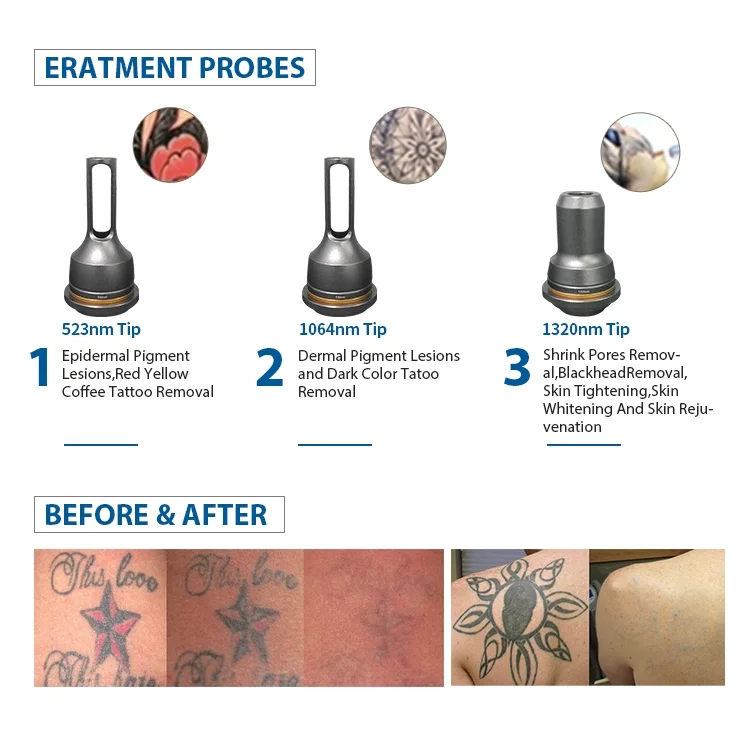
Our AL1 model supplies 1064nm, 532nm, and 1320nm standard tips. Its specs list a 6ns pulse width. It features an adjustable frequency ranging from 1 to 10Hz. It also boasts an adjustable spot diameter shifting from 1 to 8mm.
This unit also packs a 650nm infrared aiming beam and an 8.4-inch true-color LCD touchscreen. It utilizes a robust air, water, and radiator cooling setup. Its smart modular inside structure is built to help with easy moving, basic upkeep, and long-term servicing.
Of course, these neat features do not replace the need for good clinical sense. Still, an adjustable spot size and variable pulse speed give trained workers much better control over the session pace.
Picosecond Laser Systems
A true picosecond laser runs with a pulse duration that falls below one nanosecond. This incredibly short pulse can build a massive photoacoustic impact while relying far less on raw heat.
Even so, picosecond laser tattoo removal is not magically pain-free. Clients might still feel snapping and stinging. They may face redness, swelling, crusting, or temporary color shifts. The actual comfort level still hinges heavily on the wavelength, the chosen power, and the spot size. It also depends on the cooling method and the operator’s skill.
When looking at various tattoo removal machine types, clinic owners must check the real documented pulse width. They should never rely solely on a catchy product name. Clear technical papers, available wavelengths, and official safety marks matter. Proper training and solid post-sale support must also be carefully checked before buying.
Which Machine Specifications Affect Patient Comfort?
| Specification | Practical relevance |
|---|---|
| Wavelength options | Help match the system to different ink colors |
| Pulse width | Influences photoacoustic and thermal effects |
| Spot-size range | Supports controlled coverage of different tattoo areas |
| Repetition rate | Affects treatment pacing and session time |
| Beam uniformity | Helps distribute energy more evenly |
| Cooling design | Supports machine stability and comfort management |
| Aiming beam | Assists treatment placement and operator control |
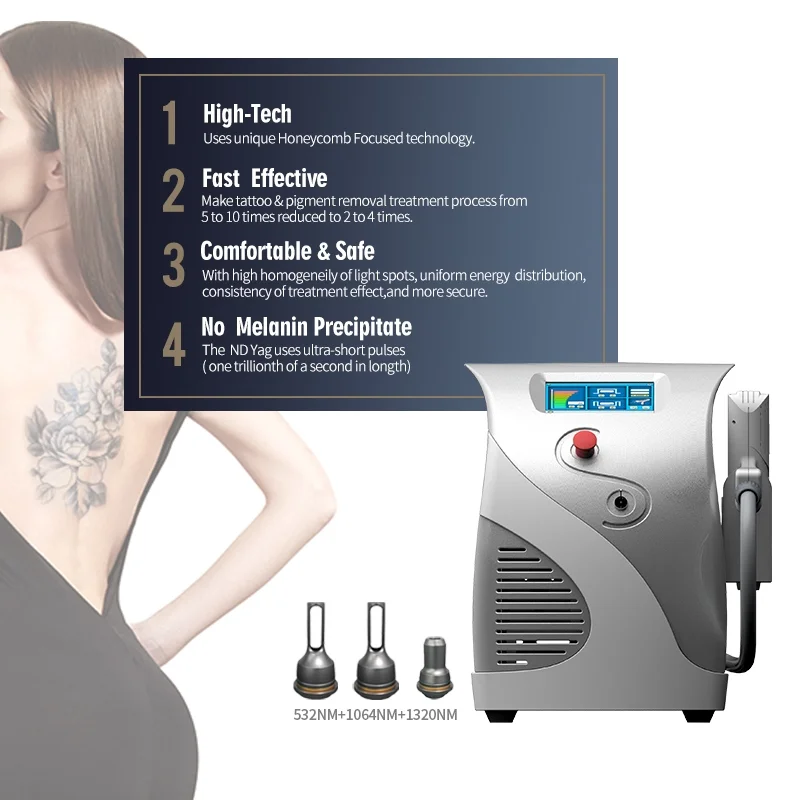
Our Q-switched lineup features special Top-Hat beam tech. This design aims to spread the energy much more evenly. Certain models also provide infrared aiming and adjustable spot sizes. They offer flexible frequencies and can fire up to 10 shots every second.
The available setups might utilize single-rod or double-rod handpieces. They offer multiple treatment tips and also feature air, water, or radiator-based cooling methods. These varied choices let clinics pick the exact gear that fits their service menu, daily client count, and running needs.
How Can Clinics Make Treatment More Comfortable?
Before Treatment: Assessment and Expectation Setting
A great protocol focused on comfort starts long before the very first shot fires.
-
Check the tattoo’s specific colors, overall density, age, exact location, and past removal attempts.
-
Look closely at the skin type, current skin health, medical background, daily pills, and potential healing issues.
-
State clearly that multiple visits will likely be needed. Explain that the feeling can shift.
-
Think about doing a small test spot when it makes clinical sense.
-
Talk about approved cooling tools or safe numbing options.
-
Hand out honest facts about the required aftercare and the normal short-term skin reactions.
This careful process builds true informed consent. It gives the operator a logical reason for picking the starting settings. Clients must truly grasp that slow, steady fading over many visits is totally normal.
During and After Treatment: Cooling, Pacing, and Follow-Up
While working, practitioners must keep talking to the client. They must supply proper eye gear and apply cooling based on the strict clinic rules. They must also pause whenever the client needs a break.
Good cooling can greatly cut down the hot feeling and boost the client’s tolerance. Pacing the session matters deeply, too. A faster firing speed might finish the job quicker. However, raw speed must never ruin control or cause bad overlapping.
In KES laser’s careful approach to light-based beauty gear, steady power, flexible settings, and strong cooling link together. Proper worker training and fast service also form vital parts of the whole experience. Our building process features strict power tests and long-running tests. We use tight quality checks, offer OEM and ODM help, and provide multi-language support after the sale.
FAQ
Q: How long does tattoo removal pain last after a session?
A: The sharpest sting normally hits right during the firing phase. Warmth, slight soreness, redness, or minor swelling may stick around afterward. Any severe, lasting, or growing pain must be checked quickly by a trained worker.
Q: What is the best laser for tattoo removal when patient comfort is a priority?
A: No single best laser for tattoo removal exists for every single person. Clinics must hunt for proper wavelengths, steady power, and handy spot-size choices. They need strong cooling, clear tech papers, and deep training programs.
Q: What factors should be considered when purchasing a tattoo removal machine for a clinic?
A: When asking what factors should be considered when purchasing a tattoo removal machine for a clinic, buyers must compare the real pulse width. They must check the wavelength spread, the power control, the spot-size range, and the firing speed. The beam smoothness, the aiming tool, the cooling, and the safety marks matter. Upkeep needs, training, warranty terms, and post-sale help are vital. Finally, the gear must fit the clinic’s normal client base, daily workload, worker skills, and local laws.