

The High Cost of Neglecting Your Picosecond Laser Machine
Preventive maintenance is not just a technical necessity but a critical business strategy that protects your return on investment. For clinic owners and distributors, a sudden equipment failure translates directly into lost revenue, canceled appointments, and a damaged brand reputation. Light-based medical & aesthetic lasers operate under extreme thermal and electrical stress. Neglecting routine care accelerates the degradation of internal components, leading to unstable energy outputs that can compromise patient safety and clinical efficacy. By implementing a strict maintenance checklist, you ensure that your picosecond laser machine delivers consistent results while maximizing the profitable lifespan of your aesthetic investment.

Core Components Maintenance: The Technical Checklist
The performance of any advanced aesthetic laser relies on the flawless operation of its primary hardware components. Monitoring these four core areas will prevent the majority of unexpected system failures.
Water System: Quality, Level, and Circulation Checks
The cooling system is the lifeblood of your aesthetic laser equipment. High-powered optical cavities generate immense heat that must be dissipated instantly to prevent cracked crystals and burnt flashlamps. You must exclusively use high-quality distilled or deionized water within the circulation system. Using standard tap water or mineral water introduces impurities that quickly calcify, creating hard scale deposits inside the water pump and laser cavity. Operators should visually verify the water level indicator daily. Furthermore, poor water circulation caused by kinked internal tubing or blocked filters will lead to immediate overheating. Keeping the water pristine and circulating freely is the single most important step in medical laser preventative maintenance.
Optical Path and Lens Integrity
Flawless optics are mandatory for precise energy delivery and safe clinical outcomes. Any microscopic dust particle or splatter on the lens will absorb laser energy, causing the glass to heat up and eventually shatter or burn. At KES laser, we engineered our advanced systems utilizing Top-Hat beam technology. This specific design guarantees enhanced treatment safety and efficacy by homogeneous distribution of energy. This Top-Hat beam profile minimizes epidermal damage, tissue textural changes, and the occurrence of scarring. However, to maintain this perfect energy distribution, operators must routinely inspect the delivery lenses. Cleaning should only be done using absolute ethanol and lint-free optical tissue in a single circular motion to protect the delicate anti-reflective coatings.
Handpiece and Articulated Arm Connector Inspection
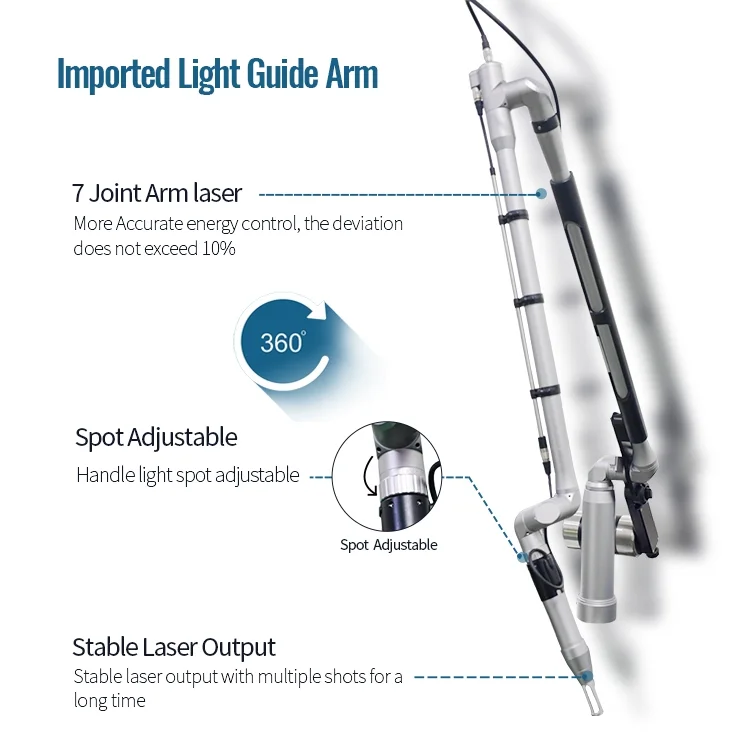
The physical delivery mechanisms endure the most mechanical wear and tear during daily clinic operations. Tension or physical resistance in the delivery system can misalign the internal mirrors. We equip our specialized aesthetic picosecond laser systems with a Korea-imported 7-joint arm laser. This premium mechanical construction ensures more accurate energy control, where the deviation does not exceed 10%. Routine maintenance requires operators to gently move all seven joints to confirm they articulate smoothly without mechanical binding. Additionally, you must inspect the electronic connector pins at the base of the handpiece for any signs of oxidation, bending, or moisture buildup that could interrupt signal transmission.
Energy-Output Consistency Checks
Clinical efficacy depends entirely on the accuracy of the emitted laser pulse. Over thousands of treatments, internal flashlamps naturally degrade, which can cause the actual energy output to fall below the parameters displayed on the screen. To guarantee consistent clinical results, technical service teams should periodically test the machine using a calibrated external energy meter. You compare the current output against the original baseline measurements taken during the installation of the equipment. If the measured energy deviates significantly from the calibrated settings, the system requires professional tuning to restore its optimal therapeutic parameters.
Establishing a Routine Servicing Schedule
Transitioning from knowing what to check to knowing exactly when to check it prevents maintenance tasks from being forgotten during busy clinic hours.
Daily and Weekly Tasks for Clinic Operators
Surface-level checks must become a mandatory habit for all clinic staff before the first patient arrives.
- Perform a visual inspection of all external power cables and the foot pedal cord to ensure there are no heavy objects resting on them.
- Turn on the machine and verify that the water circulation system engages smoothly without any gurgling noises.
- Check the water level window to confirm the tank is sufficiently filled.
- Wipe down the external casing and the touch screen using a mild, non-corrosive disinfectant to maintain a sterile clinical environment.
Monthly and Periodic Deep Checks
More intensive preventative tasks should be scheduled during off-hours to avoid disrupting patient bookings.
| Task | Frequency | Primary Benefit |
| Replace Cooling Water | Every 1 to 3 Months | Prevents internal mineral scaling and pump failure |
| Clean Dust Filters | Every Month | Maintains proper airflow and prevents electronic overheating |
| Deep Lens Inspection | Bi-Weekly | Avoids burning the optical coating and scattering the beam |
| Joint Articulation Check | Monthly | Ensures the delivery arm moves without mechanical tension |
Maintaining a Proper Maintenance Record
A detailed written log is a fundamental requirement for effective medical laser preventative maintenance. Every time water is changed, or a lens is cleaned, the operator should record the date, the task completed, the current pulse count of the machine, and their signature. If the equipment eventually requires warranty support or advanced troubleshooting, this maintenance record provides your technical service teams with a clear history of the machine, allowing them to diagnose underlying issues much faster.
Warning Signs: When to Call Professional Technical Support
While routine care handles surface issues, clinical operators must recognize the specific mechanical symptoms that require immediate intervention from certified engineers.
Unstable Energy or Misaligned Beams
If operators notice that the red aiming beam is no longer perfectly circular, or if it sits off-center within the treatment area, the optical path has been compromised. A distorted spot shape indicates that internal mirrors have shifted due to physical impact or thermal expansion. Continuing to operate the device under these conditions can cause severe burns to the patient and catastrophic damage to the internal optical cavity. This requires a certified technician to perform a complete professional optical realignment.
System Errors and Abnormal Sounds
New aesthetic lasers come with smart internal sensors. Your screen might show a water flow error that will not go away, which means the cooling loop is breaking down. A failing pump or a blocked filter often triggers this alarm. Also, you might hear strange buzzing sounds from the power box. You might hear rough grinding noises from the fans. If you hear these, you must turn off the machine right away. Ignoring these loud warnings often leads to costly electrical fires or broken power parts.
Securing Long-Term Reliability with KES laser
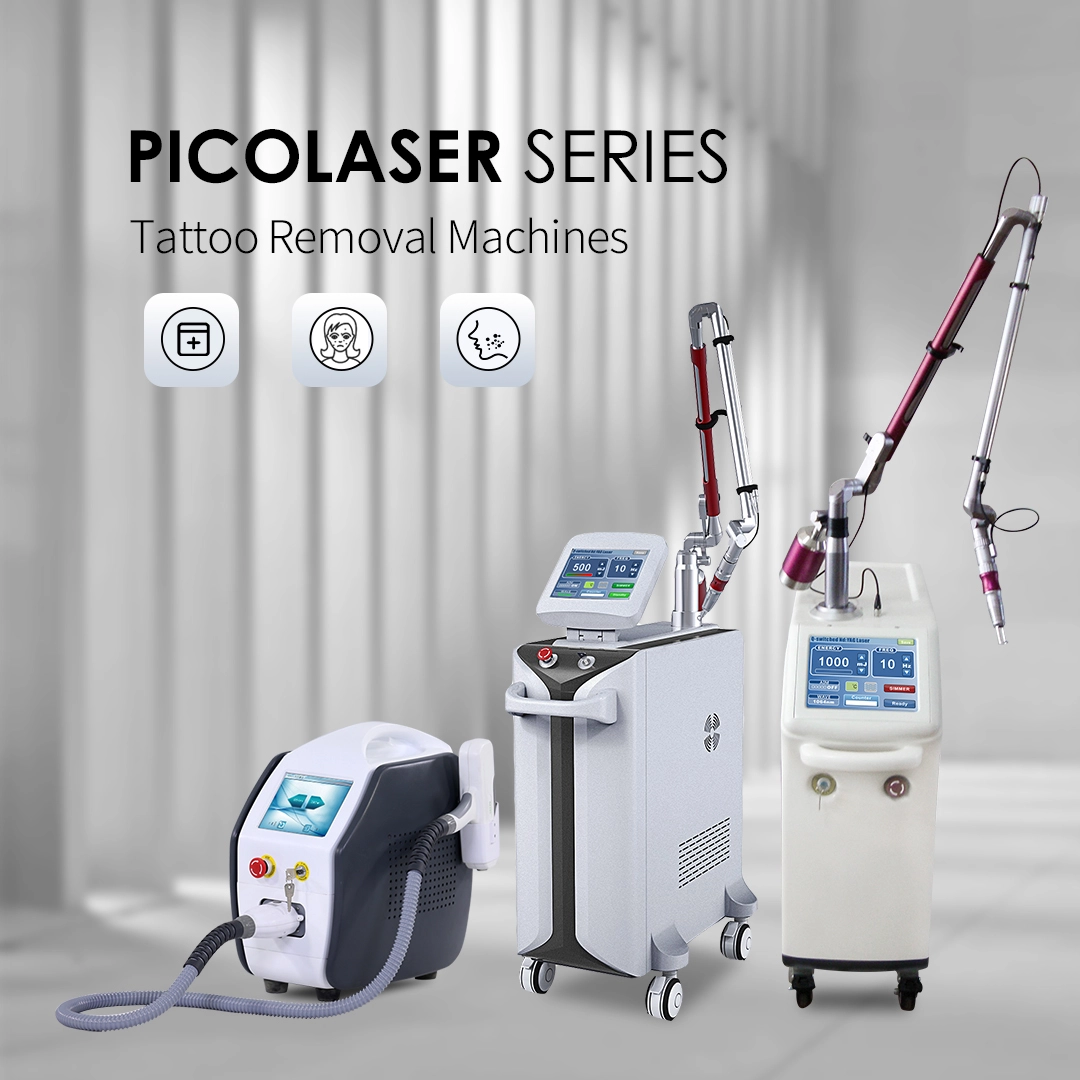
Investing in advanced aesthetic technology requires a partner dedicated to your long-term operational success. At KES laser, we have more than 15 years of experience in developing light-based medical and aesthetic devices. Our equipment is currently present in 115 countries, supported by scientifically proven clinical research. We understand that equipment reliability directly impacts your profitability. To ensure your business never faces prolonged downtime, we provide comprehensive 7*24 hours online service and training. By adhering to this preventative maintenance schedule and utilizing our dedicated after-sales technical support, you guarantee that your aesthetic laser systems will perform flawlessly for years to come.
FAQ
Q: How often should I change the water in my picosecond laser machine?
A: You need to swap out the water in your picosecond laser machine every one to three months. This timing keeps the cooling strong and stops mineral buildup. You must always pour in top-tier distilled or deionized water. Normal tap or mineral water will badly ruin the laser chamber and the water pump.
Q: What is the best way to clean the picosecond laser handpiece lens?
A: You must clean the glass softly with pure ethanol and soft optical wipes. Wipe in one smooth circle. Start from the middle and move to the outside edge. You must never use strong soaps or rough towels, or they will scratch the outer layer and ruin the laser focus.
Q: Why does my pico laser show a water flow error during operation?
A: A water flow alert mostly means the cooling setup has a problem. Low fluid levels or a dirty filter can cause this issue. Bent tubes inside the box or a broken pump will also trigger the alarm. When you see this warning, shut off the power right away. Then, check your upkeep log to make sure your filters are clean and the tank is full.
Q: How can I tell if the optical path of my aesthetic laser needs realignment?
A: You may need professional optical realignment if you notice that the aiming beam is not perfectly centered, the output spot shape is distorted, or the clinical efficacy drops despite using standard energy parameters. Realignment should only be performed by a certified technical service team.
Q: Does routine maintenance actually extend the lifespan of light-based medical lasers?
A: Yes, without a doubt. Light-based medical lasers work under huge heat and electrical loads. Normal upkeep stops the internal parts from getting too hot and breaking down. Steady daily care can add several years to the working life of your tools, which boosts your total financial return.